We often face a distinct, sharp odor before even opening the door at Summerville Hoarding Cleanup. You probably recognize that burning scent as ammonia from decomposing animal urine.
This gas actually serves as one of the most immediate health threats in these environments, capable of causing chemical burns and permanent lung damage.
Families dealing with this crisis in the Summerville, Charleston, and greater Lowcountry area must understand the dangers of ammonia in pet hoarding homes.
Our team knows this knowledge helps you protect yourself and make informed decisions about professional intervention. Let’s look at the data behind these exposure risks and explore the exact steps required for safe biohazard remediation.
The Dangers of Ammonia in Pet Hoarding Homes: How It Builds Up
Ammonia, known chemically as NH3, exists as a natural byproduct of the bacterial decomposition of urea in mammalian urine. A normal home with one or two pets manages the negligible amount of ammonia produced through basic ventilation and routine cleaning. The equation changes dramatically in an overcrowded environment.
Our recent review of 2026 data from the Animal Legal Defense Fund shows that roughly 250,000 animals in the US fall victim to hoarding situations annually. Cats represent the most commonly hoarded species in these cases. Consider a single home housing 30 cats.
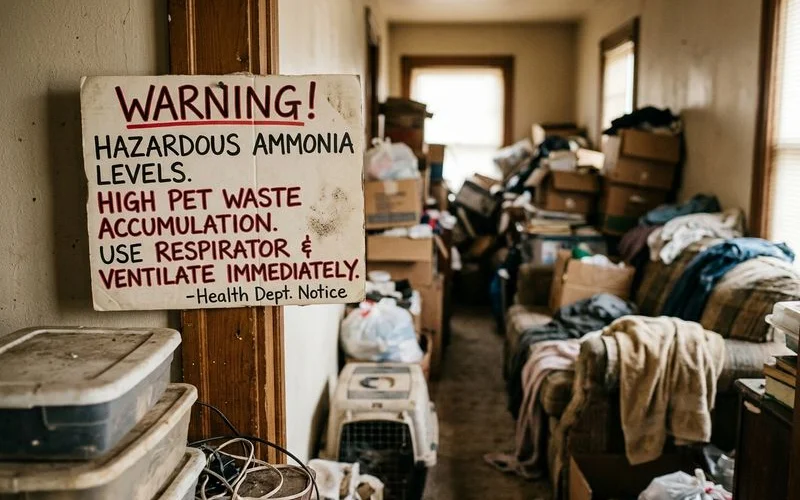
Those cats produce approximately two gallons of urine daily, with most of it soaking directly into carpets, furniture, and wooden subfloors. Bacteria quickly convert this staggering urine load into lighter-than-air ammonia gas that fills the property from floor to ceiling. We frequently measure ammonia concentrations reaching levels that would trigger immediate evacuations in any workplace setting.
Closed windows and sealed doors, often used to hide the conditions inside, trap the gas and amplify the hazard.
Several local factors accelerate this toxic buildup in Lowcountry properties:
- High South Carolina humidity speeds up the bacterial decomposition of urine.
- Warm regional temperatures drastically increase the rate of ammonia off-gassing.
- Heavy carpet padding absorbs and retains massive quantities of liquid waste.
- Porous wooden subflooring wicks urine deep into the structural joists.
- Sealed windows prevent any fresh air exchange.
Understanding Ammonia Concentration Levels
To grasp how dangerous these homes become, you need to understand how experts measure ammonia concentrations. Safety professionals track this gas in parts per million, or ppm, to determine health risks.
Our technicians rely on strict federal guidelines to determine the appropriate personal protective equipment for every job. These standards exist for industrial settings where trained workers wear specialized gear. Residents in a contaminated home face these elevated levels around the clock without any protection.
Regulatory Standards and Health Limits
The United States government sets strict limits on acceptable ammonia exposure. You can see how quickly a residential environment can violate occupational safety laws.
| Agency / Metric | Exposure Limit | Timeframe / Description |
|---|---|---|
| NIOSH (REL) | 25 ppm | Recommended 10-hour workday limit |
| OSHA (PEL) | 50 ppm | Permissible 8-hour workday limit |
| NIOSH (STEL) | 35 ppm | Short-term 15-minute exposure limit |
| NIOSH (IDLH) | 300 ppm | Immediately dangerous to life and health |
What We Measure in Hoarding Homes
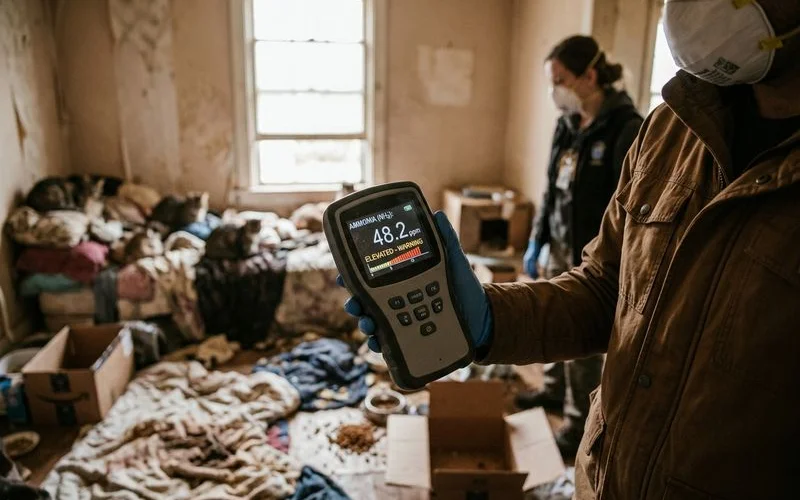
We use calibrated meters to map the exact air quality in properties across the Charleston metro area. The readings vary widely based on the layout, but they consistently reveal alarming contamination. Even moderate situations quickly surpass safe breathing thresholds.
- Moderate cases (10-20 animals): Meters typically show 25 to 75 ppm throughout the home, with the highest spikes near baseboards and heavy accumulation zones.
- Severe cases (20-50 animals): Concentrations easily reach 100 to 200 ppm in enclosed rooms, closets, and areas with pooled urine.
- Extreme cases (50+ animals): Our teams have documented concentrations exceeding the 300 ppm IDLH level. Unprotected entry at this stage becomes immediately life-threatening.
Health Effects of Chronic Ammonia Exposure
The true danger of this gas depends on both its concentration in the air and the total duration of exposure. Residents typically endure moderate to high levels continuously for months or even years.
This chronic exposure creates a progressive pattern of bodily damage. We personally witness how this toxic environment breaks down physical health over time.
Respiratory System Damage
Ammonia gas acts as a potent, highly water-soluble irritant. It reacts immediately with the moisture in your nose, throat, and lungs.
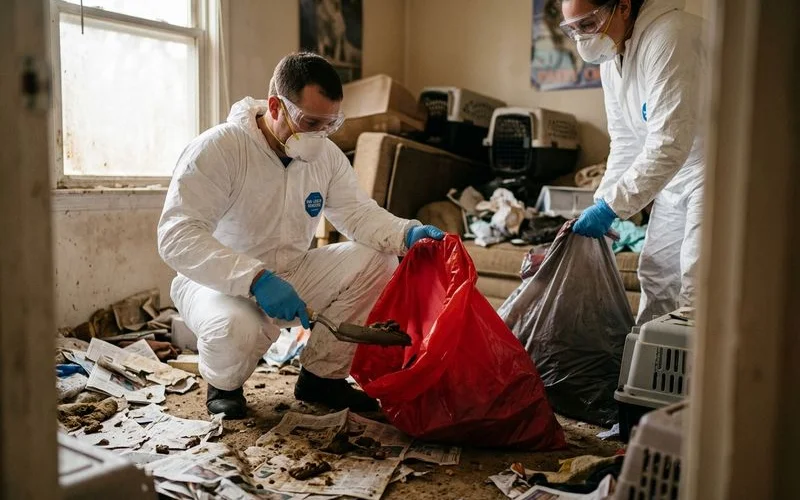
This chemical reaction produces ammonium hydroxide, a caustic alkaline substance that literally burns human tissue. Our crews wear full-face respirators specifically to prevent these burns.
- Persistent chronic cough and wheezing that worsens without relief.
- Bronchitis and severe airway inflammation.
- Decreased lung capacity and shortness of breath.
- Chemical pneumonitis caused by ongoing irritant inhalation.
- Irreversible pulmonary fibrosis, which scars the lung tissue permanently.
Many affected individuals mistake these severe symptoms for seasonal allergies or a lingering cold. They fail to connect their declining lung function to their living environment.
Eye and Skin Effects
High concentrations of this gas rapidly attack mucous membranes and exposed skin. A 2025 review in the Journal of Environmental Health notes that ammonia levels above just 25 ppm trigger immediate eye and throat irritation.
Continuous exposure causes persistent redness, tearing, and blurred vision. Our specialists warn that severe cases can even cause corneal burns, leading to permanent vision damage. Exposed skin may develop chemical dermatitis and painful rashes.
Neurological Effects
Emerging clinical research points to significant neurological consequences from breathing toxic air. Residents trapped in high-ammonia environments report chronic headaches, intense fatigue, and severe mood changes.
Acute exposure to extreme levels brings even more frightening symptoms. Victims may experience severe confusion, loss of consciousness, and seizures.
Effects on Vulnerable Populations
Children, the elderly, and anyone with preexisting asthma face the highest risks from poor air quality. A child breathes more air per unit of body weight than an adult, making their developing lungs highly susceptible to chemical damage.
Our interventions often reveal that pets also suffer greatly from these low-lying fumes. South Carolina teachers sometimes identify children living in these conditions through chronic respiratory infections or persistent odors on their clothing. The air quality alone in these properties constitutes a very serious child welfare emergency.
Why Standard Cleaning Cannot Address Ammonia Contamination
A common first impulse for concerned relatives is to grab household supplies and start scrubbing. This well-intentioned approach fails to solve the underlying biohazard.
We actively advise against DIY cleaning because standard methods are grossly inadequate and potentially lethal.
Surface Cleaning Misses the Problem
Mopping up visible puddles only removes the absolute top layer of contamination. The uric acid crystals have already soaked deep into porous building materials.
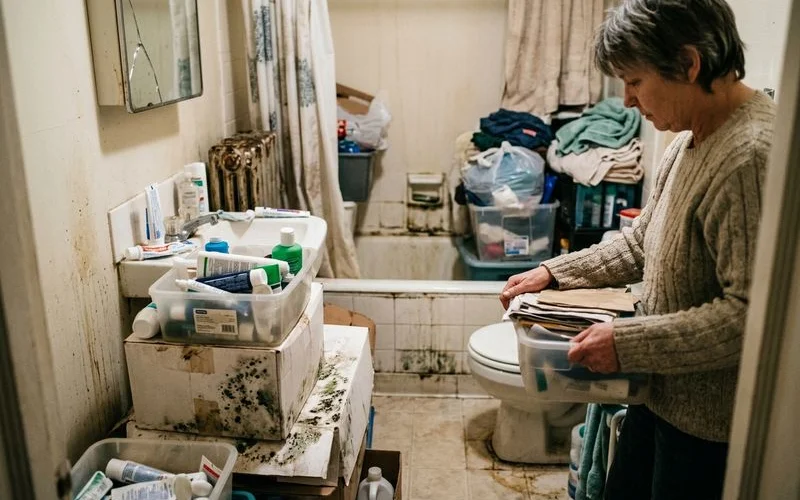
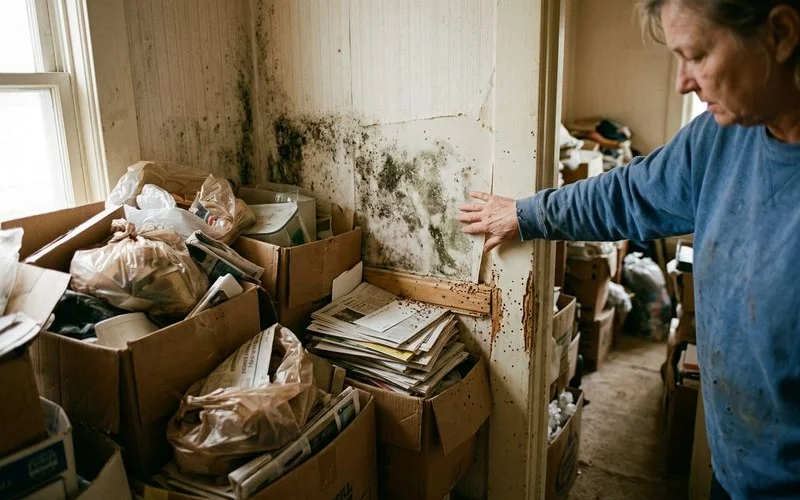
Carpet padding, drywall, and even solid concrete foundations hold massive reserves of dried urine. These hidden reservoirs will continue to off-gas toxic fumes long after the surface looks clean.
Ventilation Alone Is Insufficient
Opening a few windows provides only a temporary drop in airborne concentrations. The contaminated structural elements remain behind, acting as a constant gas factory.
Our hot, humid Lowcountry climate actually makes the situation worse. Moisture in the summer air reactivates dormant urine deposits, causing indoor pollution to spike dramatically even after a thorough airing out.
The Lethal Bleach Reaction
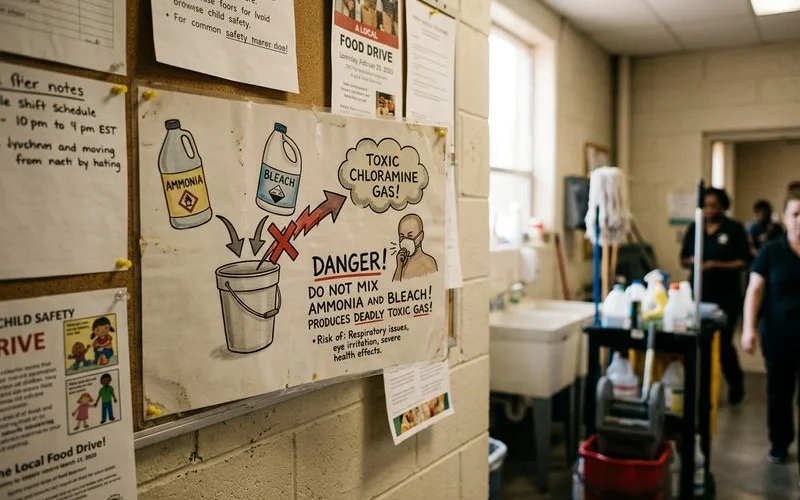
The most dangerous mistake you can make involves mixing common household bleach with animal waste. Bleach contains sodium hypochlorite, which reacts violently with the ammonia in urine.
This combination instantly produces chloramine gas, a highly toxic chemical weapon. We have seen well-meaning family members accidentally poison themselves by pouring bleach onto urine-soaked floors. Inhaling chloramine gas causes severe choking, chest pain, and fluid buildup in the lungs.
The Professional Decontamination Process
Proper remediation requires a strict, science-based approach to eliminate the hazard completely. Standard janitorial services do not possess the training or equipment for this level of decontamination.
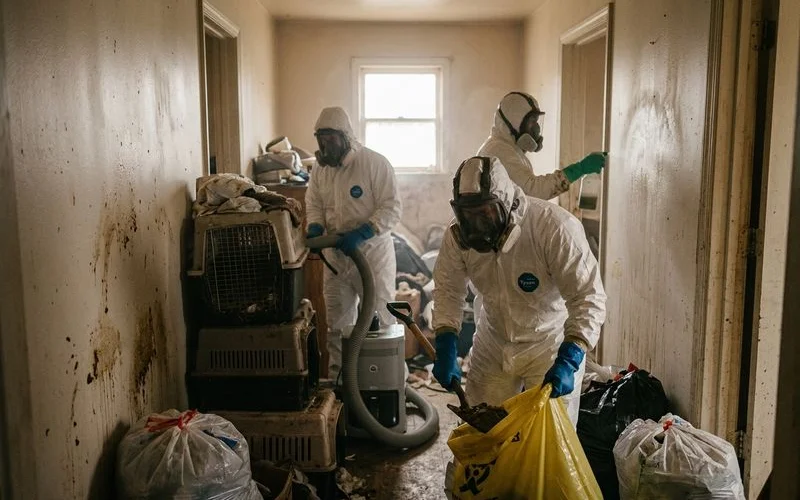
Our technicians follow a systematic protocol to neutralize the source and restore safe air quality.
Initial Assessment and Source Removal
The process begins with comprehensive air monitoring using calibrated detectors to map the danger zones. This data dictates our specific remediation plan and safety gear requirements.
Removing the ammonia-producing materials stands as the most critical step. This aggressive teardown almost always includes pulling up all carpeting and underlying padding. We often must remove subflooring right down to the joists in severe cases across the Charleston area.
Specialized Enzymatic Treatment
Specialized formulas break down stubborn uric acid crystals at the molecular level once we complete the physical teardown. Standard cleaners only mask the smell with heavy perfumes.
The enzymes actually digest the bacteria responsible for producing the gas. Our team applies multiple rounds of treatment, allowing precise drying times between each coat.
Advanced Hydroxyl Generator Deployment
Enclosed spaces with persistent odors require heavy-duty technological intervention. We deploy commercial Titan 4000 Hydroxyl Generators by International Ozone to purify the air.
These advanced machines utilize 365nm to 385nm UVA titanium dioxide coated photocatalytic lamps. This technology produces hydroxyl radicals that safely oxidize airborne pollutants, converting them into harmless water and carbon dioxide. Unlike traditional ozone machines, hydroxyl generators run completely safe in occupied spaces.
Strict Verification Testing
No property passes inspection without rigorous final verification. We conduct a final sweep with air quality monitors to ensure levels sit well below the OSHA 50 ppm permissible limit.
This includes checking inside enclosed closets, cabinets, and HVAC ductwork. You receive written documentation of all testing results to prove the home is safe for reoccupation.
Protecting Yourself When Ammonia Is Present
You must prioritize your own safety if you need to check on a compromised property. Never underestimate how quickly chemical fumes can overwhelm your respiratory system.
Our safety officers recommend taking specific precautions before crossing the threshold.
Crucial Safety Precautions
Stand near the front door and assess the initial smell before stepping inside. If your eyes begin watering or your throat burns at the entryway, the indoor concentrations already exceed safe limits.
We strongly advise against entering the property without a fitted respirator if the odor feels sharp or burning. Limit your total time inside to just a few minutes if you absolutely must enter. Never attempt to disturb or sweep up dried waste, as this kicks toxic particulate matter straight into the air.
Taking Action in the Lowcountry
The dangers of ammonia in pet hoarding homes demand immediate, professional intervention. This gas creates a severe chemical hazard that standard cleaning supplies simply cannot fix.
Our specialized crews possess the heavy-duty equipment and Hazmat training required to handle these toxic environments safely. If you face an animal hoarding cleanup situation in Summerville, Charleston, or anywhere in the South Carolina Lowcountry, please prioritize your health.
Avoid exposing yourself to the contaminated air and let trained experts take over.
We respond promptly because we understand the urgency of restoring a safe, breathable home. Call Summerville Hoarding Cleanup at (843) 517-7097 for a confidential assessment.
Your physical safety means too much to risk on a dangerous DIY cleanup attempt.