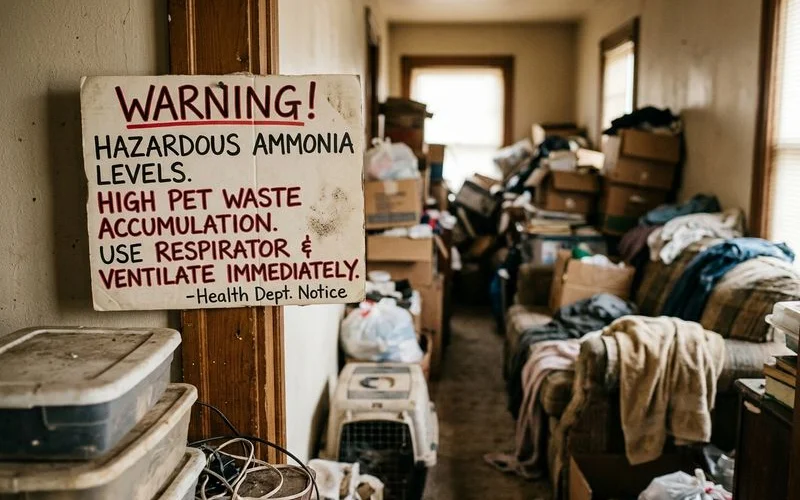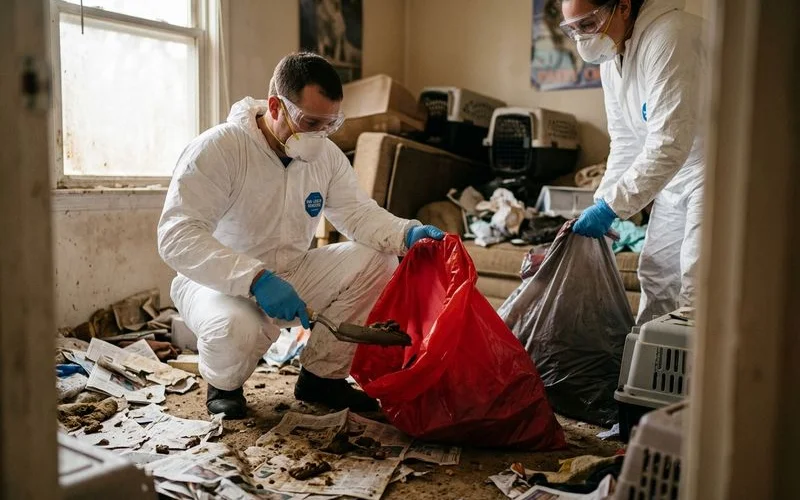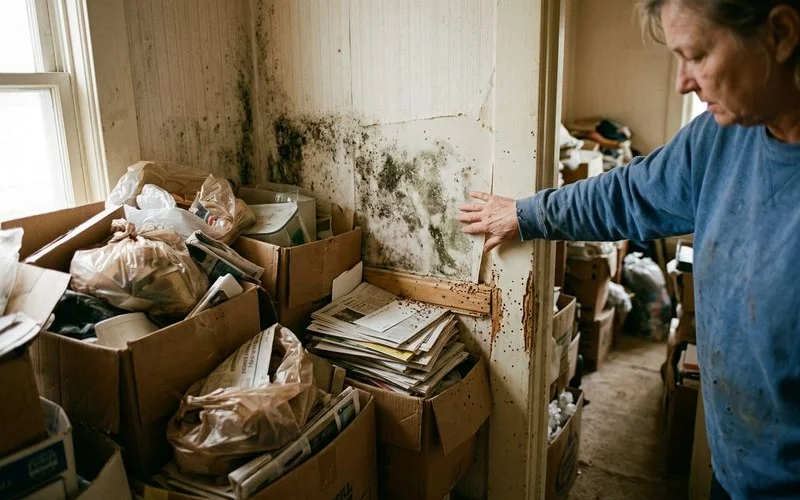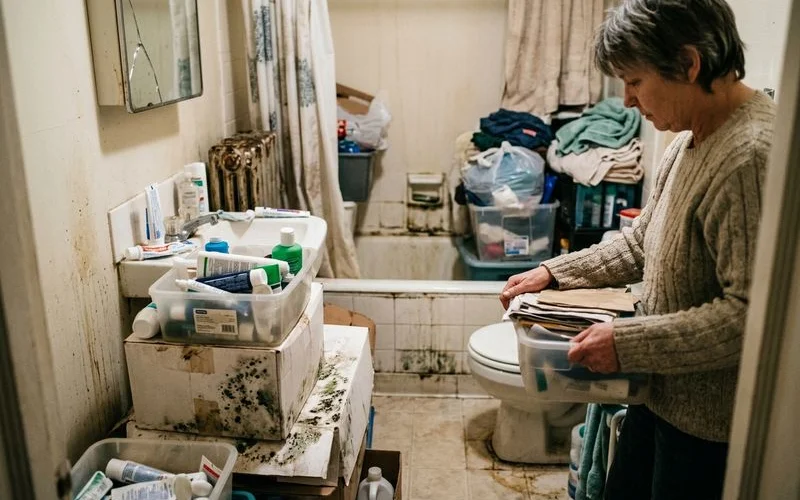
From what we see in the field, bathrooms are the critical breaking point in any hoarding situation. The American Psychiatric Association estimates that hoarding disorder affects roughly 2.6 percent of the US adult population. We recognize that a hoarded bathroom is a breeding ground for dangerous pathogens and toxic mold.
This specific room presents some of the most serious and immediate health risks.
Our team at Summerville Hoarding Cleanup treats bathroom restoration as a top priority. The combination of moisture, confined space, and restricted airflow creates an environment where biological hazards develop rapidly. We frequently measure indoor humidity levels exceeding 70 percent here in the South Carolina Lowcountry.
This local climate heavily amplifies the hidden health risks of hoarding in bathrooms. Let us look at the data, what it actually tells us, and explore a few practical ways to respond safely.
The Unique Vulnerability of Bathrooms
Bathrooms are explicitly designed to manage the constant flow of water. Every surface and fixture relies on regular use and maintenance. We evaluate these spaces using the Clutter Image Rating (CIR) scale.
A CIR score of 4 or 5 in a bathroom means the plumbing fixtures are completely blocked. Our experience shows that when water flow is restricted, it seeps into walls and subfloors.
Why bathrooms deteriorate faster than other rooms:
- Constant moisture from ambient humidity, even when fixtures are not in use
- Plumbing fixtures that can develop slow leaks behind accumulated items
- Ventilation systems that become blocked or non-functional
- Small room dimensions that cause clutter to reach critical density quickly
- Tile and grout that harbor moisture when not properly maintained
- Drains that develop blockages without regular use and cleaning
A bathroom that has been inaccessible for just six months can develop conditions that pose severe health risks. A 2026 climate report notes that August humidity in Charleston averages 79 percent. We know this level of extreme atmospheric moisture accelerates structural decay.
After a year, the hazards usually require professional biohazard remediation to address safely.
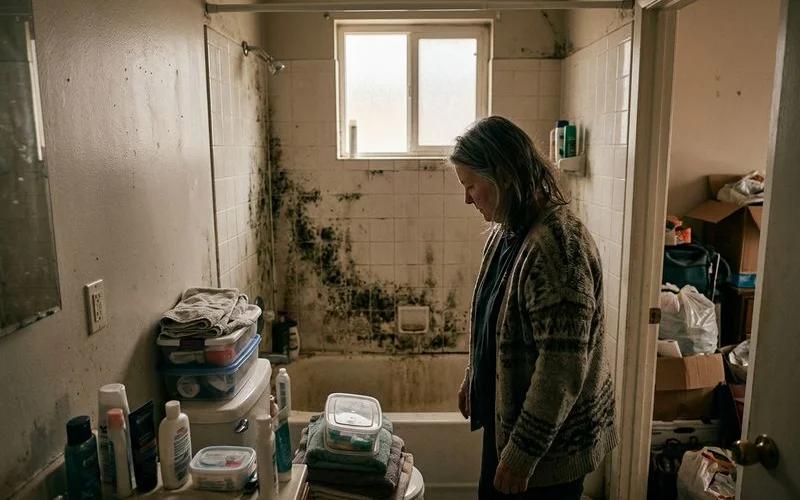
Mold: The Most Common and Underestimated Threat
Mold is present in virtually every hoarded bathroom we encounter. The humid climate in the Summerville and Charleston area acts as an accelerant for spore reproduction. We assess these environments using the updated ANSI/IICRC S520-2024 Standard for Professional Mold Remediation.
This 2024 framework classifies actual visible or hidden mold growth as a Condition 3 hazard. Our crews treat Condition 3 environments with extreme caution.
To clarify the exact risks, review this breakdown of common bathroom molds.
| Mold Variety | Preferred Bathroom Habitat | Associated Health Risks |
|---|---|---|
| Black mold (Stachybotrys chartarum) | Wet cellulose materials like drywall and cardboard | Severe respiratory symptoms, chronic fatigue, and neurological issues |
| Aspergillus | Damp window sills and shower curtains | Lung infections, especially in people with weakened immune systems |
| Cladosporium | Bathroom fixtures, walls, and stored fabrics | Allergic reactions and severe asthma attacks |
| Penicillium | Water-damaged subfloors and cabinets | Respiratory inflammation and allergic responses |
The health risks from mold exposure range from mild allergic reactions to life-threatening conditions. Chronic exposure compounds these risks over time. We frequently see elderly residents and individuals with pre-existing respiratory conditions suffer the most severe effects.
Hoarding disorder disproportionately affects older adults. Our safety protocols prioritize removing these vulnerable individuals from the contaminated environment.
Sewage and Waste Contamination
When a bathroom becomes heavily cluttered, the occupant often loses access to the toilet. This fundamental loss forces alternative arrangements that create significant biohazard emergencies. We frequently discover makeshift toilets using portable containers that accumulate without proper disposal.
Toilets also overflow or back up because residents cannot access the shut-off valve behind the debris. Our technicians often find drain lines completely blocked by disuse and compacted trash.
These severe conditions introduce human waste directly into the living environment. The danger extends far beyond the bathroom door. We must account for the rapid spread of microscopic pathogens.
When waste materials dry out, the bacteria become aerosolized dust particles. Our air quality tests show that these particles can travel through the HVAC system to infect the entire house.
Pathogens commonly found in bathroom sewage:
- E. coli: Causes severe gastrointestinal illness and potential kidney failure.
- Salmonella: Triggers salmonellosis with symptoms including fever and cramps.
- Hepatitis A: A contagious liver infection transmitted through contact with fecal matter.
- Norovirus: A highly contagious virus that saw a significant spike in cases across the US in 2025.
You face a massive exposure risk just by breathing the air in a contaminated house. Direct contact is not required to contract a severe illness. Our biohazard and hazard remediation team is trained to handle human waste contamination safely.
Strict containment protocols prevent cross-contamination during the entire cleanup process.
Standing Water and Bacterial Breeding Grounds
Leaking fixtures and condensation accumulation easily create standing water in hoarded bathrooms. Standing water in a warm, enclosed environment becomes a bacterial breeding ground within hours. We pay close attention to the risks of Legionnaires’ disease in these specific conditions.
Recent 2025 data from the Centers for Disease Control and Prevention shows that Legionnaires’ cases have been steadily increasing. Our research highlights that Legionella bacteria thrive in stagnant water sitting between 77 and 113 degrees Fahrenheit.
Unused hot water tanks and stagnant bathroom pipes provide the perfect incubation temperature for these bacteria. Another dangerous pathogen is Pseudomonas aeruginosa. We know this bacterium thrives in moist environments and causes painful skin and ear infections.
Standing water also attracts mosquitoes carrying the West Nile virus in the South Carolina Lowcountry.
Structural Damage from Standing Water
Standing water accelerates severe structural damage beneath the surface. Water seeping through bathroom flooring destroys subfloor materials and weakens the supporting joists. We have encountered hoarded bathrooms where the floor was too structurally compromised to walk on safely.
A weakened floor poses a catastrophic fall hazard. Our structural assessments always evaluate the integrity of the subfloor before heavy debris removal begins.
Pest Infestations Unique to Bathrooms
Hoarded bathrooms attract specific types of pests that thrive in dark, moist, and undisturbed environments. German cockroaches represent one of the most aggressive and dangerous bathroom invaders. We regularly see how fast a minor issue becomes a massive infestation.
A single pregnant female German cockroach can produce up to 30,000 descendants in just 12 months. Our extermination partners note that nymphs often use shared plumbing lines to travel between rooms or apartment units in roughly 40 days.
Common pests found in hoarded bathrooms:
- Cockroaches: They carry bacteria and trigger severe asthma attacks.
- Silverfish: These insects feed on paper, cardboard, and adhesives.
- Drain flies: They breed in the organic material built up inside unused drains.
- Rodents: Rats and mice leave droppings that carry the deadly hantavirus.
- Fungus gnats: Their presence indicates the extensive decomposition of moist organic material.
These pests use the bathroom as a secure base to colonize the rest of the property. A cockroach colony established in a wet bathroom will spread through the entire house within a few months. We always incorporate aggressive pest control measures into our initial cleanup phase.
This action prevents insects from migrating to neighboring properties during the debris removal process.
Chemical Hazards from Stored Products
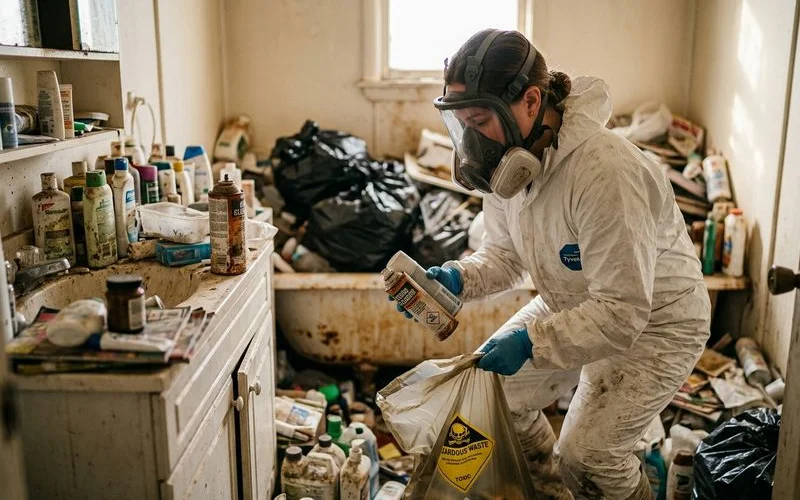
Bathrooms in hoarding situations often contain large quantities of expired cleaning products and medications. These products degrade over time and create highly volatile chemical hazards. We frequently discover leaking bottles of bleach and ammonia buried under piles of damp towels.
Mixing sodium hypochlorite (bleach) with ammonia creates toxic chloramine gas. Our safety briefings highlight that inhaling chloramine gas causes severe shortness of breath and fluid accumulation in the lungs.
To prevent accidental poisoning, you must understand how common chemicals interact.
| Chemical A | Chemical B | Resulting Toxic Hazard |
|---|---|---|
| Chlorine Bleach | Ammonia | Chloramine gas (Causes severe respiratory damage) |
| Chlorine Bleach | Acids (Vinegar, Toilet Bowl Cleaner) | Chlorine gas (Causes burning eyes and lung damage) |
| Expired Aerosols | High Heat/Humidity | Pressurized explosion risk |
| Rubbing Alcohol | Open Flame/Spark | Immediate fire hazard |
During the cleanup process, technicians identify, segregate, and dispose of all chemical products according to South Carolina hazardous waste regulations. Improper disposal can lead to dangerous reactions inside trash bags. We require all team members to wear specialized respirators when handling unmarked liquid containers.
Proper training is absolutely essential for this dangerous step.
The Cascading Effect on Physical Health
The health risks from a hoarded bathroom do not exist in a vacuum. They compound and interact to create a health burden much greater than the sum of its parts. We rely on recent psychiatric data to understand the full scope of the occupant’s vulnerability.
Clinical studies from 2026 indicate that 75 percent of individuals with hoarding disorder also suffer from a co-occurring mood or anxiety disorder. Our approach accounts for this immense psychological stress alongside the physical dangers.
How Bathroom Contamination Worsens Health
Mold exposure severely weakens the respiratory system. This weakness makes the occupant much more vulnerable to infections from sewage pathogens. We see pest allergens trigger chronic inflammation that worsens mold-related breathing issues.
The inability to bathe properly leads to persistent skin infections and poor hygiene. Our assessments show that sleep disruption from pest activity further compromises the immune system.
For elderly residents in the Summerville area, these cascading effects often lead to hospitalization. Narrow pathways between piles of debris create a massive fall risk for older adults. We know that a fall in a contaminated bathroom can turn a minor injury into a life-threatening infection.
Prompt intervention is critical to break this dangerous cycle.
Professional Bathroom Restoration Process
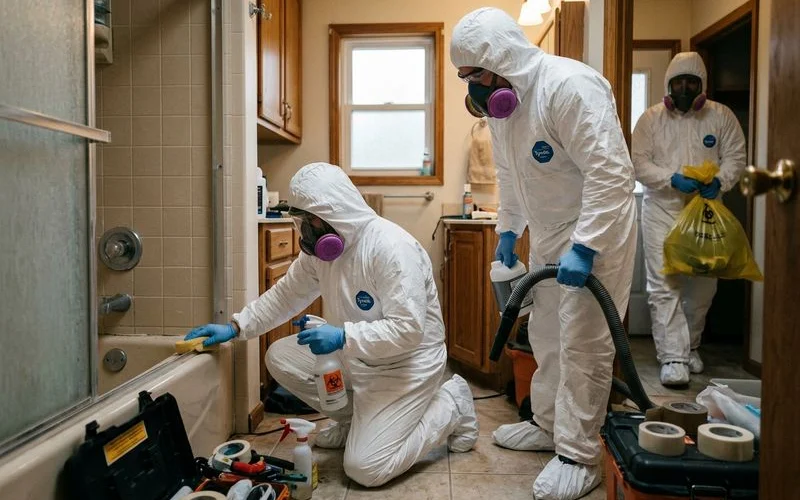
Restoring a hoarded bathroom requires a systematic approach to address every hazard safely. We follow a strict, multi-step protocol at Summerville Hoarding Cleanup to ensure complete decontamination.
The process aligns with the latest ANSI/IICRC S520-2024 standards for professional remediation. These guidelines protect both the workers and the property owner. Every technician on our staff executes this process layer by layer.
The 8-Step Bathroom Restoration Protocol:
- Containment: The bathroom is sealed from the rest of the home using heavy plastic sheeting.
- Personal protective equipment (PPE): All team members wear full PPE, including respirators, Tyvek suits, chemical-resistant gloves, and waterproof boots.
- Waste removal: Accumulated items and contaminated belongings are carefully removed.
- Biohazard remediation: All contaminated surfaces receive treatment with professional-grade antimicrobial solutions.
- Mold remediation: Visible mold is removed following strict industry protocols.
- Plumbing evaluation: All fixtures are tested for proper operation, and slow leaks are repaired.
- Deep cleaning and sanitization: Every surface is sanitized to food-safe standards.
- Ventilation restoration: Exhaust fans are replaced to restore proper airflow.
Our kitchen and bathroom recovery service encompasses this entire protocol. The specific steps are adapted to the unique conditions found in each home. We guarantee that the final environment is safe, clean, and fully functional.
A restored bathroom is a crucial step for reclaiming the entire house.
Do Not Attempt Bathroom Cleanup Without Professional Help
Do not attempt to clean a hoarded bathroom yourself without proper training. The high concentration of biohazards and airborne pathogens makes these spaces incredibly dangerous. We have seen well-meaning family members contract serious illnesses from DIY cleanup attempts.
A professional hazard team addresses several specific dangers that ordinary cleaning cannot safely handle.
- Structural Collapses: Moving heavy items in a compromised space can trigger a sudden floor collapse.
- Airborne Pathogens: Disturbing severe Condition 3 mold colonies sends millions of toxic spores into the air.
- Viral Exposure: Handling dried waste materials without full protective gear creates direct exposure to deadly viruses.
We strongly advise against using consumer-grade cleaning supplies on industrial-level biohazards. Specialized equipment is required to neutralize the threat without spreading it.
Get Professional Help Now
If you know of a hoarded bathroom in the Summerville or Charleston area, the health risks demand prompt attention. Every day that a severe hoarding situation remains unaddressed, the biological and structural conditions worsen. We provide free, confidential assessments that include a thorough evaluation of all bathroom hazards.
The assessment will clearly explain exactly what you can expect during the recovery effort.
- A complete visual inspection of structural integrity
- Identification of active biohazards and chemical risks
- A transparent breakdown of the required remediation steps
Call us today at (843) 517-7097 to schedule your consultation. The peace of mind that comes from knowing a professional team is handling these hazards is invaluable. We are ready to help you address The Hidden Health Risks of Hoarding in Bathrooms safely.
Your family’s health is far too important to ignore. For more information about the full range of health hazards in hoarding environments, read our guide on the 7 signs you need professional hoarding cleanup help.