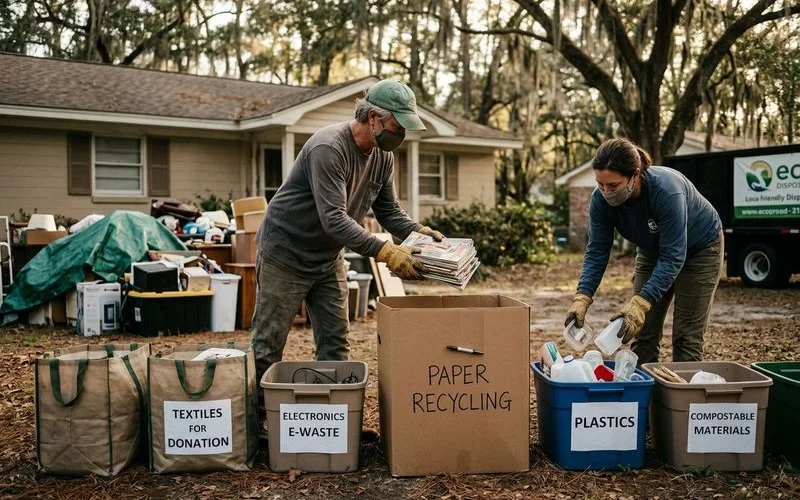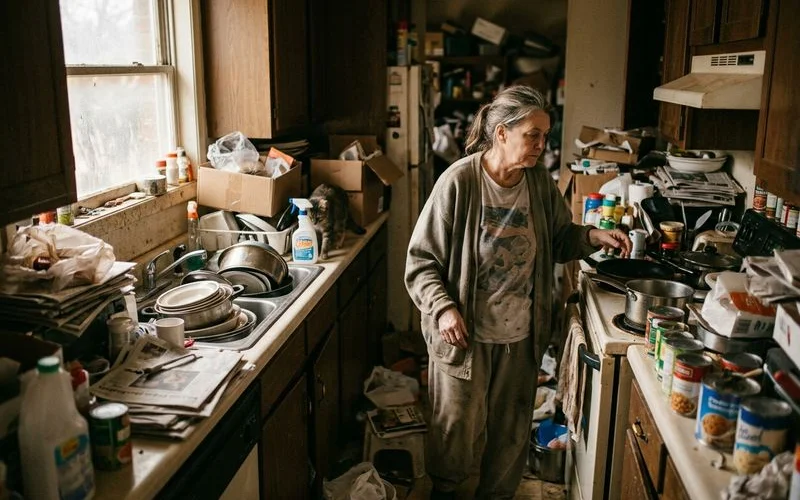
From what I see in the field, most families hit a breaking point in the kitchen first. The counters disappear under expired food, and the sink fills with dishes that sit for months.
This creates a difficult crossroad.
We hear this question every single week at Summerville Hoarding Cleanup. Can you clean a hoarded kitchen yourself or should you hire a pro? The instinct is usually to grab some trash bags and start throwing things away.
That reaction makes total sense.
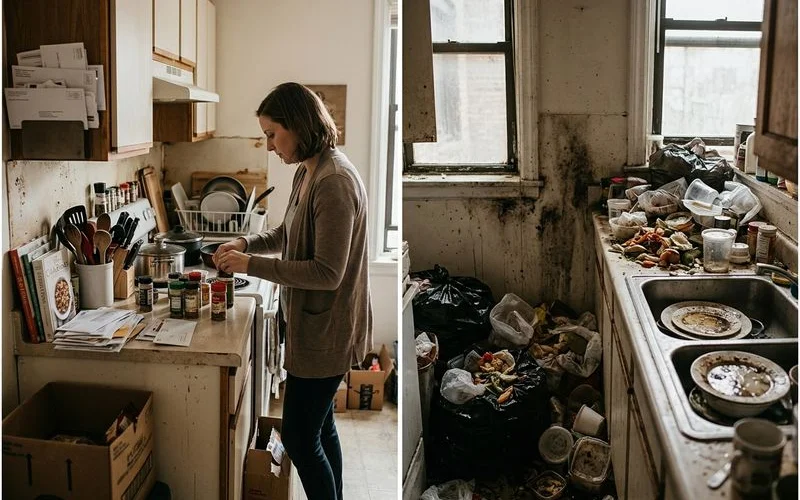
A hoarded space is fundamentally different from a messy room. The real danger hides beneath the surface clutter. Decaying organic matter, hidden mold, and compromised plumbing change this from a simple chore into a genuine health hazard.
Our team has assessed hundreds of properties across the Charleston and Summerville areas. Mild cases often just need a dedicated weekend of work, while severe situations demand specialized safety gear. Let’s look at the specific hazards you might face to help you make the safest choice.
Understanding the Levels of Kitchen Hoarding
Before buying supplies, you need an objective way to evaluate the room. Emotional attachments make it hard to judge severity accurately. The American Psychiatric Association notes that about 2.6% of the US population struggles with hoarding disorder. That number jumps to nearly 6% for adults over 65 based on 2026 data.
We recommend using the Clutter Image Rating (CIR) scale developed by the International OCD Foundation. This visual tool ranks room clutter from 1 to 9. A score of 4 or higher indicates a clinical problem that usually requires outside support. Kitchen hoarding generally falls into three distinct categories based on these visual markers.
- Mild accumulation (CIR 1-3): You will find cluttered counters and overstuffed cabinets. The space remains usable for basic food prep. There are no visible signs of mold or pest activity.
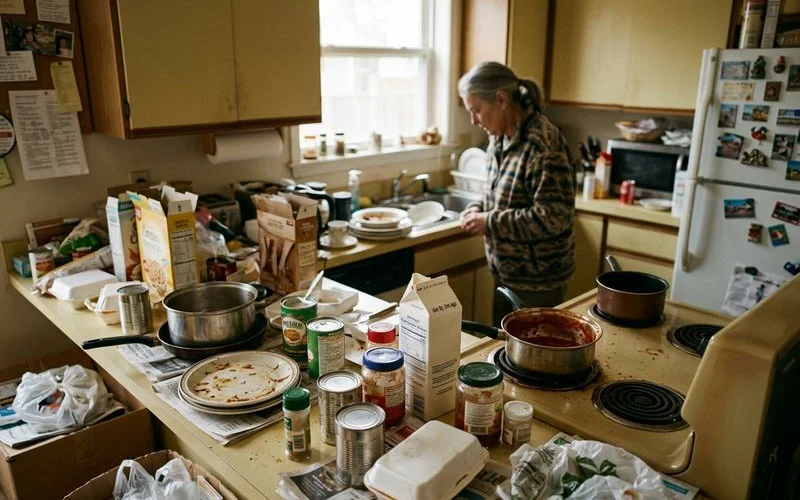
- Moderate hoarding (CIR 4-6): The area becomes partially nonfunctional. Sinks hold unwashed dishes for weeks, and expired food fills the refrigerator. Unpleasant odors begin to suggest decomposing material.
- Severe hoarding (CIR 7-9): The kitchen is completely inaccessible. Visible mold growth and established pest infestations are present. The occupant often relies entirely on fast food or microwave meals eaten elsewhere.
When DIY Kitchen Cleanup Is Reasonable
If your CIR assessment places the space in the mild category, handling it yourself is a practical option. Professional hoarding cleanup averages between $1,000 and $4,000 in the US for standard jobs. Taking the DIY route saves serious money if the environment is safe.
Our standard advice is to gather the right protective gear before touching anything. You need heavy-duty garbage bags and rubber gloves. An N95 face mask is also essential for dust protection.
- EPA-registered disinfectants for food surfaces
- Heavy-duty garbage bags in multiple sizes
- Rubber gloves and an N95 face mask
- Scrub brushes and sponges to discard later
- Sorting bins for keeping, donating, and trashing items
Start by removing obvious trash like expired food and broken packaging. This initial sweep clears immediate space and builds momentum. Next, empty the refrigerator completely.
We highly suggest wiping down all interior fridge surfaces with an EPA-registered cleaner rather than standard dish soap. Only return items with valid expiration dates and intact packaging. Finally, evaluate the remaining kitchen gadgets honestly. Unused appliances from the last two years are simply contributing to the clutter.
| Warning Sign | Required Action |
|---|---|
| Mold > 10 square feet | Stop immediately and call a professional. |
| Concentrated pest droppings | Assume hidden contamination and halt work. |
| Unbearable odors | Upgrade to professional air remediation. |
| Mixed chemicals | Never combine bleach and ammonia products. |
Red Flags That Mean You Need Professional Help
Specific conditions demand immediate professional intervention. Buying stronger cleaning chemicals will not solve these deep-rooted hazards. Specialized training and safe disposal methods become mandatory to protect your health.
Biological Contamination
Food waste accumulating for months creates severe biological threats. Rotting organic material breeds dangerous bacteria like Salmonella, E. coli, and Clostridium. The warm, humid climate in the Charleston area accelerates this rot far faster than in drier regions.
We constantly see how these aggressive environments compromise air quality. The National Fire Protection Association also warns that grease and debris piled near stoves create massive fire risks. Contact a pro if you notice any of these severe signs.
- Black or green mold on walls and ceilings
- Large, concentrated areas of animal waste
- Liquefied food leaking onto floors
- Standing water trapped under appliances
Established Pest Infestations
Spotting one dead insect differs greatly from finding a breeding colony. German cockroaches, palmetto bugs, and rodents thrive in the Lowcountry climate. A hoarded kitchen provides endless food and undisturbed shelter for these populations.
Our crews frequently encounter the dangerous aftermath of pest infestations. Dry sweeping mouse or rat droppings can aerosolize Hantavirus particles into the air you breathe. Cockroaches also spread gastroenteritis across food prep surfaces.
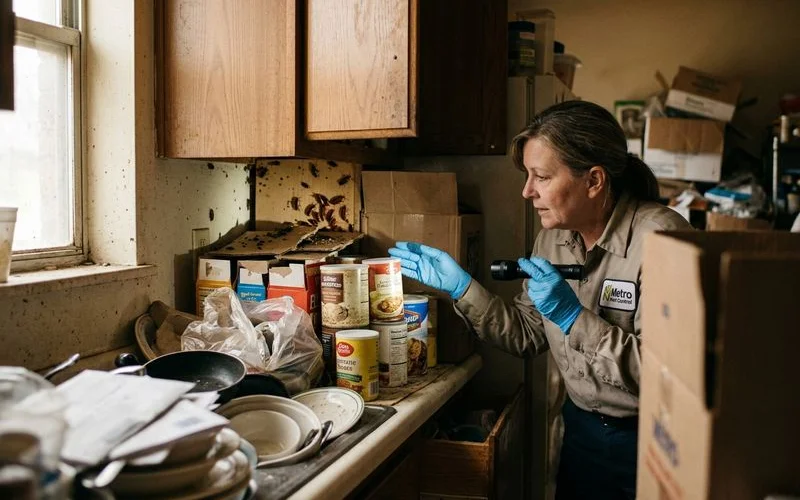
A true infestation requires coordinated pest treatment and deep decontamination. Porous wood shelving absorbs rodent urine and must be completely removed. Standard cleaning methods simply spread the bacteria around.
Structural Damage
Clutter easily hides severe structural decay. Unaddressed water leaks destroy cabinetry and soften the flooring beneath heavy appliances. The average empty upper kitchen cabinet weighs 30 to 50 pounds per linear foot.
We know that overloading these units causes catastrophic wall collapses. Hidden moisture also feeds the growth of Stachybotrys chartarum, commonly known as black mold, deep inside the drywall. These physical hazards put anyone attempting a cleanup at risk of serious injury.
The Professional Advantage for Kitchen Hoarding
Motivated homeowners simply cannot match the capabilities of a specialized team. Professional cleanup technicians use commercial-grade solutions to handle severe biohazards safely.
Our technicians follow strict guidelines set by the Institute of Inspection, Cleaning and Restoration Certification (IICRC). This ensures every step meets national safety standards. The right equipment targets the root causes of contamination safely.
- Advanced PPE: Teams use full-face respirators and disposable coveralls for heavy biological exposure.
- Industrial Equipment: Technicians deploy HEPA-filtered negative air machines and hydroxyl generators to eliminate odors without damaging property.
- Regulated Disposal: Biohazardous materials and expired medications go to specific Dorchester and Berkeley County processing facilities.
- Comprehensive Treatment: Professionals trace mold and pest issues from the kitchen into the rest of the house.
Can You Clean a Hoarded Kitchen Yourself or Should You Hire a Pro? Making the Decision
Deciding on the right approach requires honesty about the physical and mental hurdles. About 75% of hoarding cases co-occur with depression or severe anxiety based on 2025 clinical data. This makes the emotional attachment to items just as challenging as the physical mess.
We suggest using a straightforward checklist to remove the emotion from the choice. Rely on objective facts rather than arguing over what constitutes trash.
| DIY Approach is Safe If… | Call a Pro If… |
|---|---|
| CIR score is 1 to 3 | CIR score is 4 or higher |
| Only small spots of mold exist | Black mold covers structural walls |
| Floors feel solid and stable | Visible water damage weakens floors |
| Odors are manageable | Smells cause immediate nausea |
What to Expect from Professional Kitchen Hoarding Cleanup
Hiring an expert brings a structured, predictable process to a chaotic situation. Reputable companies start with a detailed assessment to identify specific hazards and provide accurate estimates. This evaluation can even happen via photos if an in-person visit feels too invasive.
Our process strictly follows OSHA’s HAZWOPER standards for handling biohazardous waste safely. The first priority is shutting off dangerous utilities and securing clear pathways. Next, the team systematically sorts items into keep, donate, and discard piles alongside the family.
Deep decontamination follows the initial clearing phase. Technicians scrub remaining cabinets and coordinate repairs for ruined drywall or warped flooring. Our kitchen and bathroom recovery service at Summerville Hoarding Cleanup specifically targets these intense environments. The goal is to eliminate the unique combination of grease, food rot, and emotional stress these spaces hold.
Taking the First Step
Making the choice to intervene is the single most important action you can take. Kitchen hoarding situations only decay further over time. Pest populations multiply, and toxic mold spreads quietly behind the drywall.
We offer no-obligation assessments for residents in Summerville, Charleston, Goose Creek, and the Lowcountry. If you are still wondering, can you clean a hoarded kitchen yourself or should you hire a pro, you can reach the team at (843) 517-7097 for honest guidance. The call is free of judgment, so take that first step today for a healthier home.