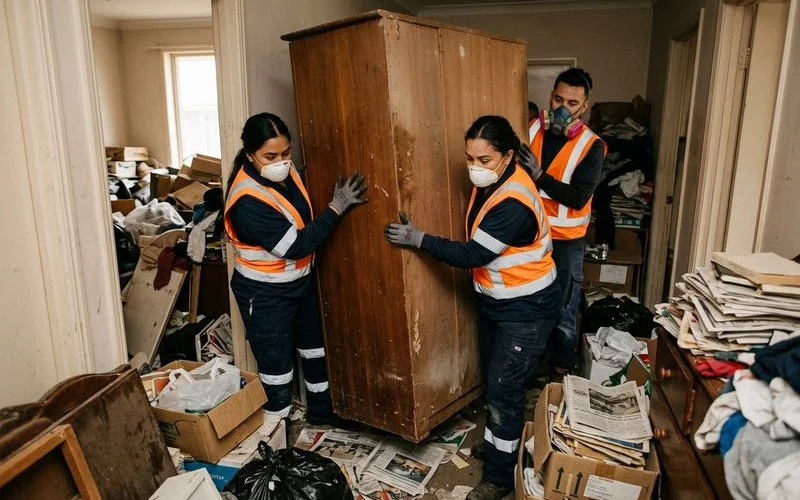
Most people underestimate the sheer physical weight hidden inside a heavily cluttered home.
You might imagine scattered clothing or loose paperwork, but the reality often involves compressed mounds of saturated magazines, buried appliances, and failing floorboards.
Heavy Debris Removal in Hoarding Situations: What to Know Before You Start requires more than just a strong back and a rented dumpster.
Our debris removal and clutter organization teams across the Lowcountry handle these exact scenarios daily.
Families face massive physical dangers when attempting this task without proper preparation.
Let us walk through the types of heavy items present, the hidden risks, and the safest steps for clearing the space.
Types of Heavy Debris Found in Hoarding Homes
The range of heavy items encountered in severe cleanouts is remarkably broad. Understanding these materials helps set appropriate expectations for the project scope.
Large Furniture and Appliances
Hoarded homes frequently contain multiple pieces of large furniture in every single room. Couches, dressers, dining tables, and old appliances get completely buried under daily accumulations.
These items block access pathways and make simple movements nearly impossible for untrained helpers.
Our crews frequently find solid oak dressers or sleeper sofas trapped under hundreds of pounds of other household goods. Moisture trapped in these confined spaces causes the wood to swell and rot over the years.
This waterlogging significantly increases the weight of each piece while simultaneously weakening its structural integrity.
Compressed and Saturated Materials
Materials at the bottom of long-standing piles compress tightly over time. Paper, clothing, and blankets become incredibly dense under the constant pressure of the objects above them.
Roof leaks and plumbing failures often introduce moisture into these compacted layers, creating a massive weight hazard.
We use a simple formula to explain this hazard to clients when they want to handle boxes themselves. A standard banker’s box of dry magazines weighs roughly 35 pounds.
That exact same box can exceed 100 pounds once saturated with water and compressed by gravity.
| Item Type | Estimated Dry Weight | Estimated Saturated Weight | Risk Factor |
|---|---|---|---|
| Standard Box of Magazines | 35 lbs | 100+ lbs | Extremely High |
| Queen Size Mattress | 60 lbs | 150+ lbs | High |
| Large Bag of Clothing | 20 lbs | 70+ lbs | Moderate |
Construction Materials and Structural Debris
The accumulated weight of possessions frequently causes severe structural damage to the residence. Standard United States residential building codes, like the International Residential Code (IRC), mandate that living room floors support a live load of just 40 pounds per square foot.
Hoarding environments routinely exceed this weight limit by a massive margin. Floors sag drastically and sometimes collapse entirely under the strain.
Our structural assessments in the Summerville area have uncovered dangerous voids where flooring completely failed beneath the clutter.
Clearing these unstable zones requires specialized temporary bracing and careful weight redistribution techniques.
Collections Gone to Extremes
Severe clutter scenarios often involve concentrated collections of incredibly heavy objects. We regularly clear homes containing thousands of canned goods or stacks of ceramic dishware reaching the ceiling.
These heavy loads create severe point-loading conditions on specific areas of the home’s framing. This concentrated stress damages floor joists and makes the physical extraction process grueling.
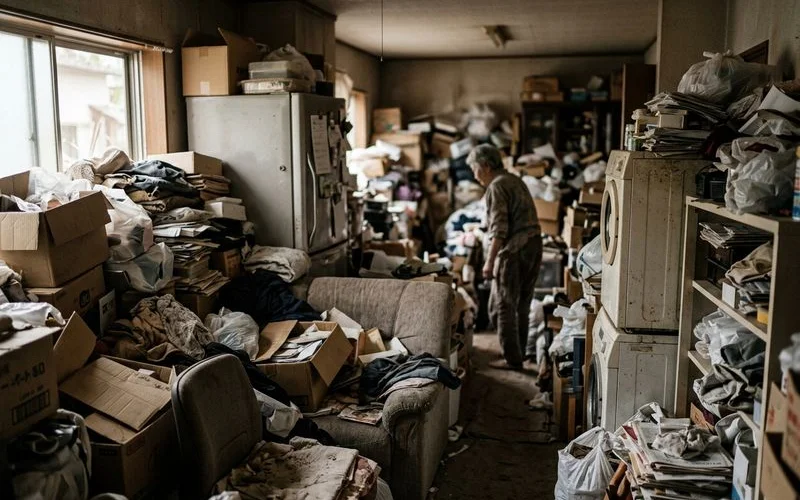
The Physical Risks of DIY Heavy Debris Removal
Attempting to extract heavy debris from a cluttered residence exposes individuals to serious physical dangers that go beyond simple soreness.
Musculoskeletal Injuries
The Occupational Safety and Health Administration (OSHA) recommends a maximum lifting limit of 50 pounds for a single person under ideal conditions. A heavily cluttered room offers absolutely no ideal conditions for safe lifting.
Back injuries, herniated discs, and torn muscles happen frequently during amateur cleanout attempts.
Our professionals use mechanical aids to offset these severe ergonomic hazards. You are typically forced to lift from awkward, bent positions while twisting your spine around solid obstacles.
Falls and Trips
Cluttered floors remain treacherous under any circumstances. Carrying an eighty-pound load across an unstable surface multiplies the falling danger significantly.
Limited visibility over a large box prevents you from seeing floor holes, pet waste, or broken glass. Falls while carrying heavy objects combine your body weight with the load’s impact force.
These specific accidents frequently result in bone fractures, concussions, and severe crushing injuries.
Structural Collapse
Removing heavy items must happen in a specific sequence to prevent sudden structural failure. Weakened walls sometimes rely on stacked possessions for unintended support.
Removing a heavy dresser that is actively bracing a damaged wall can trigger a fast, catastrophic collapse.
Our teams evaluate load-bearing dynamics before shifting any large objects inside an older home.
Hidden Hazards
Heavy debris piles conceal a terrifying variety of dangerous materials that easily pierce regular clothing.
- Sharps: Broken glass, exposed nails, and discarded syringes hide within compacted trash.
- Biohazards: Disturbed nests release rodent droppings, which carry severe respiratory risks like Hantavirus.
- Chemical Spills: Leaking automotive batteries and corroded cleaning supplies create toxic fumes in enclosed spaces.
- Mold Spores: Moving water-damaged furniture agitates black mold colonies, filling the air with harmful particles.
Appropriate personal protective equipment (PPE), including N95 respirators and puncture-resistant gloves, is mandatory for surviving this specific environment.
The Logistical Challenges
Beyond the physical strain, massive debris removal presents logistical nightmares that completely derail amateur attempts.
Access and Egress
Getting a heavy appliance out of a house requires a clear path directly to the disposal vehicle. These necessary clear pathways rarely exist at the beginning of a severe cleanout project.
Clearing the exit route and moving the large items become tangled, frustrating tasks that require careful sequencing.
Doors often measure too narrow for swollen, water-damaged furniture. Hallways restrict the tight turning radius needed for manipulating bulky items toward the door.
Equipment Requirements
Effective extraction requires commercial-grade tools that standard homeowners simply do not possess. Moving thousands of pounds safely requires specific gear to prevent bodily harm:
- Heavy-duty appliance dollies rated for 800 pounds or more.
- Forearm lifting straps for securing and balancing awkward furniture.
- Reciprocating saws for breaking down oversized items indoors.
- Temporary aluminum ramps for navigating loaded carts over exterior stairs.
Our crews rely on these tools daily to maintain high safety standards.
Disposal Logistics
A single major cleanout generates tens of thousands of pounds of trash that must go to appropriate facilities.
Standard 20-yard roll-off dumpsters typically hold a maximum of two to three tons of material. Saturated paper and rotting furniture quickly exceed municipal roadway weight limits, resulting in hefty fines.
Our project managers coordinate multiple daily swaps with local waste facilities to keep the project moving. Arranging these logistics requires established vendor relationships and strict scheduling.
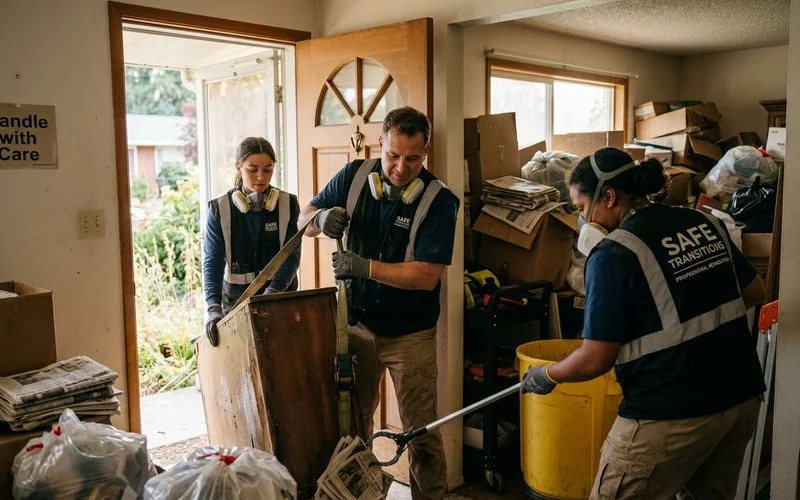
How Professional Teams Handle Heavy Debris
Experienced cleanup companies approach massive material removal using highly systematic, tested methods developed over years of difficult jobs.
Structural Assessment First
We evaluate the structural integrity of the entire property before shifting any major weight. Signs of sagging floors, cracked drywall, and ceiling stains indicate compromised wooden framing.
Our protocol requires consulting licensed structural engineers for extreme cases ranked as Level 5 on the Institute for Challenging Disorganization (ICD) scale.
This careful evaluation dictates our entire removal sequence for the week. We gradually reduce weight across a room to prevent sudden load shifts on damaged floor joists.
Pathway Creation
Crews establish clear, hazard-free exit routes before tackling the heaviest objects in the home. This strategy involves clearing the immediate entryways first and slowly pushing deeper into the structure.
We enforce a minimum pathway width to allow safe passage for a two-person lifting team and their equipment.
Heavy plastic sheeting and thick plywood boards protect the remaining intact flooring from cart wheels and heavy foot traffic.
Staged Removal
The extraction sequence prioritizes safety and structural balance over pure removal speed.
- Clear lighter surface clutter to expose the heavy target items safely.
- Assess the heavy object for water damage, hidden pests, or structural bracing roles.
- Dismantle oversized pieces using reciprocating saws if they exceed doorway dimensions.
- Extract the heavy materials starting closest to the exit and working inward systematically.
Team Lifting and Equipment
Our technicians execute lifts in coordinated teams with clearly assigned roles and communication phrases. One person acts as a dedicated spotter to monitor the walking path for new hazards.
The primary lifters use mechanical advantage tools and strict ergonomic techniques to protect their joints.
We utilize lever systems and heavy-duty come-alongs to carefully extract items trapped in extremely narrow corridors.
Continuous Safety Monitoring
A dedicated safety supervisor monitors the environment constantly throughout the heavy lifting shift. This oversight prevents fatigue-related accidents and ensures all workers hydrate properly in hot conditions.
The supervisor halts work immediately if they detect shifting floors, new biohazards, or compromised air quality.
What to Expect During Your Cleanup
If your family requires intervention in the Summerville or Charleston area, understanding the process reduces anxiety and helps you plan.
The Assessment Visit
Our coordinators walk through the property to gauge the total volume and physical weight of the materials. Technicians identify the most challenging extraction zones and map out temporary exterior staging areas.
This thorough inspection allows us to generate a highly accurate, transparent project estimate for the family.
Timeline
Extracting thousands of pounds of compacted material requires significant time and physical endurance. A severe Level 4 or 5 hoarding environment takes a full professional crew three to five consecutive days to clear.
We build realistic schedules based on historical data from similar Lowcountry properties. Daily progress updates keep families fully informed about our pacing and any newly discovered challenges.
Your Role
Family members should stay completely off-site during the heavy demolition phases for their own physical safety. This separation protects you from airborne mold spores, sharp objects, and dangerous tripping hazards.
Our team leaders schedule specific sorting sessions when we uncover sentimental items or important financial documents. These sessions ensure you keep control over your valuable possessions without risking your health.
Post-Removal Assessment
The completion of the extraction phase reveals the true condition of the underlying house and flooring. We document any structural damage previously hidden beneath the mounds of heavy possessions.
This final visual report helps property owners plan necessary carpentry repairs or flooring replacements with their local contractors.

The Bottom Line
Extracting extreme weight from a severely cluttered home is a complex, hazardous operation that demands respect. The combination of failing floors, hidden biohazards, and exhausting physical labor creates a highly dangerous environment for anyone untrained.
Our specialized crews bring the necessary commercial equipment, safety gear, and structural knowledge to complete the job safely.
If you are facing an overwhelming cleanup project involving massive debris in Summerville, Charleston, Goose Creek, or anywhere in the South Carolina Lowcountry, contact us at (843) 517-7097. Let a professional team handle the extreme heavy lifting so your family stays safe.
Call us today to schedule your confidential property assessment.