Our professional service team constantly encounters The Hidden Dangers of Hoarding: Mold, Pests, and Structural Damage. The visible clutter grabs the headlines, but the real threats hide inside the walls and beneath the floorboards.
Recent 2026 data from the American Psychiatric Association reveals that hoarding disorder affects approximately 2.6 percent of the general population. That statistic represents millions of adults living in environments where structural and biological hazards multiply unchecked.
Our crew knows that true remediation requires looking past the stacked boxes. Identifying the root causes of decay is the only way to truly restore a property.
The Mold Problem in Hoarding Homes
Mold is arguably the most aggressive threat we see inside cluttered Lowcountry properties. The Environmental Protection Agency (EPA) recommends keeping indoor relative humidity between 30 and 50 percent to stop fungal growth. Maintaining those optimal levels is nearly impossible during a South Carolina summer without proper airflow.
Our technicians frequently find that stagnant air trapped behind floor-to-ceiling clutter creates severe microclimates. BioTek Environmental’s 2025 climate data confirms that when indoor humidity exceeds 60 percent, mold can begin growing on wet materials within just 24 to 48 hours. A small plumbing drip hidden behind piles of magazines quickly turns into a massive biological hazard.
Why Mold Thrives in Hoarding Conditions
Clutter systematically destroys a home’s ability to breathe. Piled belongings create the perfect storm for mold colonies through several specific mechanisms:
- Blocked HVAC Vents: Stacked boxes prevent conditioned air from circulating, allowing humidity to skyrocket.
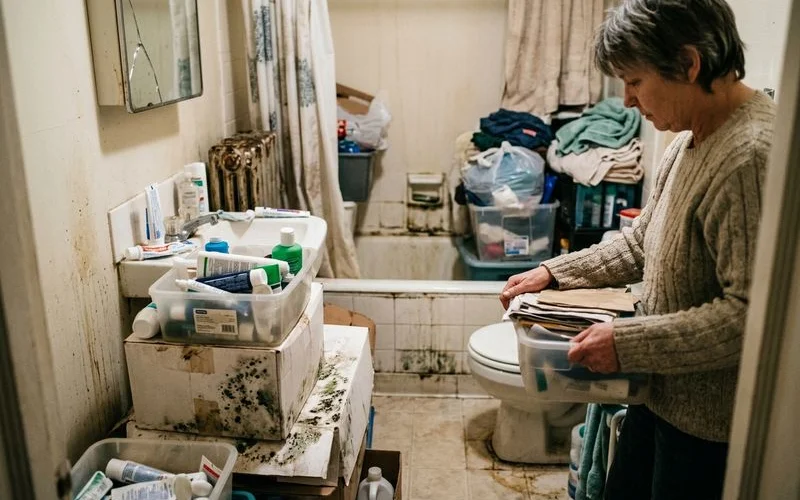
- Hidden Water Leaks: Slow drips under sinks or behind toilets go unnoticed for years.
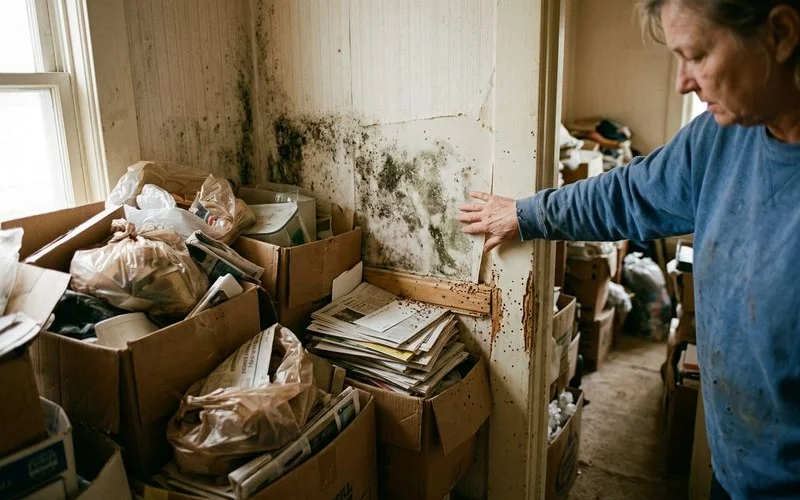
- Abundant Organic Food: Cardboard, newspapers, and natural fabrics provide endless nutrients for fungal spores.
- Inaccessible Filters: Routine maintenance stops completely when heating and cooling units are buried under debris.
We often discover that homeowners have turned off their air conditioning entirely to avoid blowing dust around. This decision accelerates the fungal spread across every organic surface in the room.
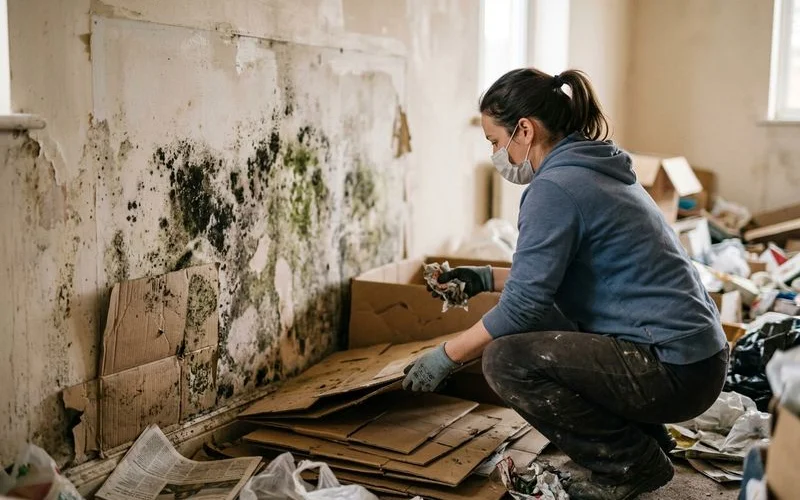
Health Impacts of Mold Exposure
The physical toll of living inside a giant mold incubator develops gradually. Residents frequently mistake their symptoms for seasonal allergies or a persistent winter cold.
Exposure to standard household molds triggers coughing, sneezing, and severe eye irritation. The situation escalates dangerously when toxic species like Stachybotrys chartarum (black mold) take over saturated drywall. This specific fungus produces mycotoxins that cause chronic respiratory conditions, persistent headaches, and profound fatigue.
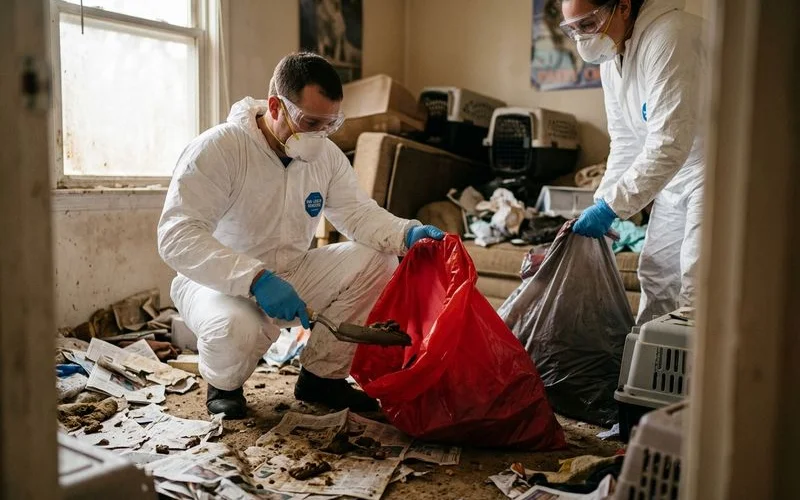
Our cleanup crews wear full respiratory protection for a reason. Disturbing these hidden colonies without proper containment will flood the breathing zone with millions of toxic spores.
Pest Infestations: More Than Just Unpleasant
The warm and humid climate of the South Carolina Lowcountry already requires constant pest management. A severely cluttered home elevates those favorable conditions into an absolute paradise for vermin.
Our field assessments routinely uncover infestations that have been multiplying undisturbed for decades. Pests simply need food, water, and shelter to thrive. A hoarded residence provides all three survival requirements in unlimited quantities.
Common Pests in Lowcountry Hoarding Situations
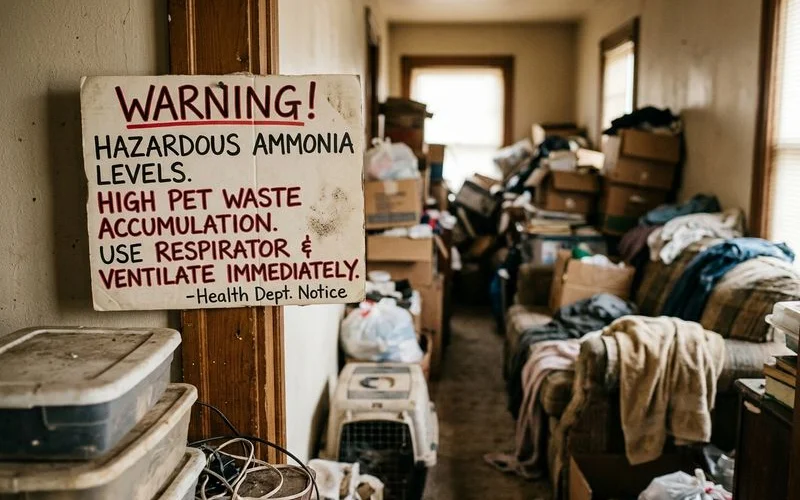
Cockroaches and rodents dominate the enclosed ecosystems of hoarded properties. German cockroaches represent the most explosive threat to indoor sanitation.
Recent 2025 data from the NC State Extension highlights that a single female German cockroach can produce up to 400 offspring, reaching breeding maturity in roughly 100 days.
That rapid lifecycle means a minor kitchen issue morphs into a population of thousands within just four to six months. Rodents introduce an entirely different category of physical danger. Mice and rats constantly gnaw on electrical wiring hidden inside the walls, creating an extreme fire hazard. Their droppings and urine also spread dangerous diseases like hantavirus and salmonellosis throughout the living space.
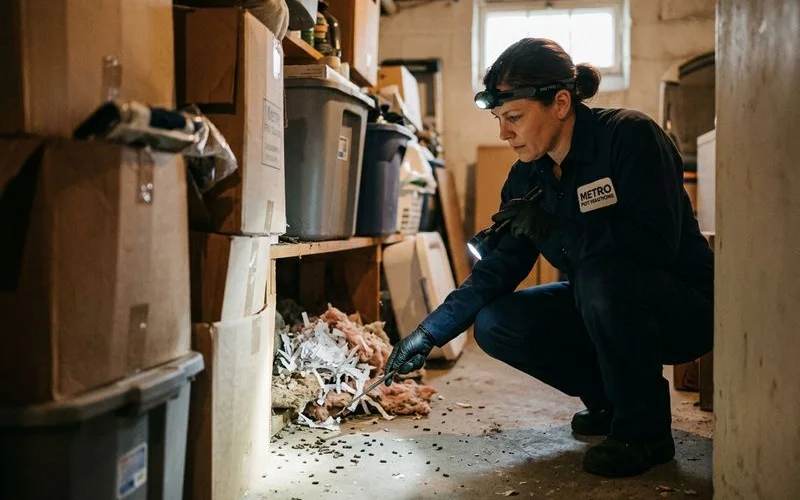
The Contamination Cascade
Living pests are only the first phase of the sanitation crisis. Vermin leave behind a trail of biological waste that ruins building materials and triggers severe allergic reactions.
We refer to this compounding disaster as the contamination cascade. Animal urine soaks deeply into porous subfloors, baseboards, and structural framing. Surface cleaning cannot remove this embedded biohazard.
To fully understand the destruction, consider the timeline of untreated pest waste:
- Initial Accumulation: Droppings and urine pool in dark corners behind clutter.
- Material Saturation: Liquid waste penetrates drywall and wooden floor joists.
- Airborne Aerosolization: Dried roach casings and rodent feces break down into inhalable dust.
- Secondary Mold: The added moisture from animal waste feeds aggressive new mold colonies.
Structural Damage: The Invisible Crisis
The sheer weight of accumulated possessions slowly destroys the fundamental architecture of a house. This invisible crisis develops silently behind locked doors and drawn curtains.
Our structural inspections frequently reveal homes teetering on the edge of partial collapse. The damage remains completely hidden until a catastrophic failure finally forces the occupants to seek help.
Weight Loading and Floor Failure
Residential building codes strictly regulate how much weight a floor can safely hold. The International Residential Code (IRC) mandates that standard residential floors are designed for a live load of 40 pounds per square foot.
A room packed from floor to ceiling with heavy magazines, canned goods, and damp clothing easily exceeds that 40-pound limit. The constant, crushing pressure causes floor joists to sag, bow, and eventually crack.
You can often spot the warning signs by looking closely at the doorways. Doors that suddenly refuse to close, visible cracks radiating from window frames, and bouncy floors all indicate severe structural stress.
Water Damage and Foundation Issues
Undetected water intrusion destroys the strength of the home’s framing from the bottom up. A slow plumbing leak silently saturates the subfloor for years, turning solid plywood into a crumbling, sponge-like mess.
In the Charleston and Summerville areas, homes built over crawl spaces face amplified risks. Blocked foundation vents trap humid air underneath the house, triggering several destructive events:
- Accelerated Wood Rot: Floor joists lose their structural integrity and begin to crumble.
- Pest Attraction: Subterranean termites seek out the softened, damp wood for easy nesting.
- Vapor Barrier Failure: High humidity completely overwhelms standard crawl space moisture protection.
The financial consequences of ignoring these foundational issues are staggering. Regional 2025 data shows that standard foundation repair in South Carolina averages around $5,000, while severe structural failures requiring steel helical piers can easily push repair costs between $15,000 and $21,000.
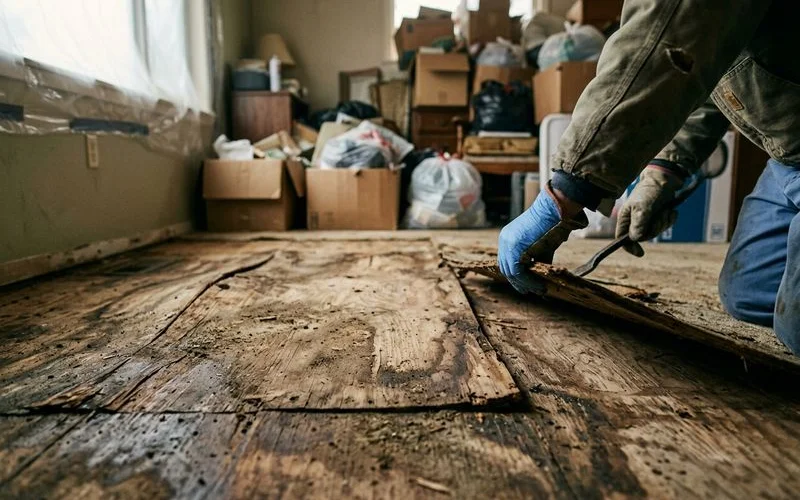
The Hidden Dangers of Hoarding: Mold, Pests, and Structural Damage Are Interconnected
Treating just one symptom of a hoarded home will never solve the underlying crisis. The biological and structural threats feed off each other in a continuous cycle of destruction.
Our specialists have mapped exactly how these hazards interact to accelerate property decay. Ignoring one element guarantees the eventual return of the others.
| The Hazard | The Root Cause | The Cascading Effect |
|---|---|---|
| Toxic Mold | Blocked airflow and hidden plumbing leaks. | Rots wooden floor joists and attracts moisture-loving pests. |
| Vermin | Unlimited food sources and undisturbed shelter. | Chews through wires, shreds insulation, and spreads disease. |
| Structural Decay | Massive weight limits exceeded by clutter. | Sags the foundation, creating new gaps for water and pests to enter. |
Effective restoration demands a comprehensive strategy. Treating the roaches while ignoring the damp, rotting subfloor simply sets the stage for the next infestation.
Protecting Yourself and Your Family
Approaching a severely cluttered property requires extreme caution and professional expertise. Attempting to clear out a compromised space without proper protective equipment puts your immediate health at risk. While local cleanup costs vary based on the severity of the biohazards, securing a safe living environment is priceless.
We proudly offer specialized biohazard and hazard remediation services created for the complex contamination scenarios found in Lowcountry hoarding environments.
If you suspect a loved one is facing The Hidden Dangers of Hoarding: Mold, Pests, and Structural Damage, professional intervention is the safest path forward. Contact us at (843) 517-7097 for a confidential assessment. Making the call is the crucial first step toward restoring the home and reclaiming peace of mind.