Understanding the core differences between hoarding cleanup vs regular cleaning service: what to expect, what it costs, and who to hire saves families immense frustration. Many families reach a breaking point and immediately call a standard residential maid service.
This reaction makes complete sense. A house needs cleaning, so you naturally dial a local cleaner.
We see this exact scenario play out weekly at our professional service team. Relatives often spend hundreds of dollars on a standard crew, only to realize the team cannot safely enter the property.
This gap in expectations causes unnecessary emotional distress and delays critical help.
Standard cleaning maintains a functional living space, whereas hoarding remediation rebuilds a safe environment from the ground up. Let us break down the exact differences in equipment, training, and emotional support required for both processes.
The Fundamental Difference
A regular cleaning service maintains a functional home. A hoarding cleanup service restores a dysfunctional one.
That single distinction drives every operational difference between the two industries. Cleaning companies operate under the assumption that a home possesses a baseline level of order. Staff expect to find accessible rooms, reachable surfaces, and standard household dust.
Hoarding cleanup assumes the exact opposite.
The Institute for Challenging Disorganization (ICD) Clutter-Hoarding Scale is the US industry standard, categorizing properties from Level 1 (mild clutter) to Level 5 (severe structural hazards).
We base our entire operational protocol on this recognized framework to ensure proper resource allocation. Properties at Level 3 or higher typically lack accessible pathways and face compromised structural integrity. Transforming these environments requires more than a mop and a bucket.
Volume and Scale of Work
A standard residential cleaner works around the items already organized within your property. Employees dust floating shelves, vacuum exposed carpets, and sanitize clear bathroom counters.
The contents of the room stay exactly where they are. Hoarding cleanup requires the physical extraction of massive material volumes before any actual scrubbing begins.
Moderate situations routinely require filling several 40-yard roll-off dumpsters. Severe cases often involve removing tens of thousands of pounds of debris over several weeks.
| Aspect | Regular Cleaning | Hoarding Cleanup |
|---|---|---|
| Material removed | 1-2 standard trash bags | 5,000 to 20,000+ pounds |
| Typical duration | 2 to 8 hours | 1 to 30+ days |
| Crew size | 1 to 2 people | 4 to 10+ specialists |
| Equipment | Consumer vacuums, sprays | Heavy machinery, 40-yard dumpsters |
| Disposal method | Curbside municipal bins | Commercial landfill routing |
Sending a standard two-person maid service to a Level 4 environment is simply unsafe. The crew lacks the commercial logistics and physical capacity to make a dent in the accumulation. They would spend their entire shift just trying to clear a three-foot path to the front door.
Safety Training and Certification
General housekeeping professionals receive training on basic chemical safety and standard equipment operation. These skills keep typical households sparkling, but they completely fail to address the severe hazards lurking in heavy accumulation zones.
Critical hazards unique to heavy accumulation:
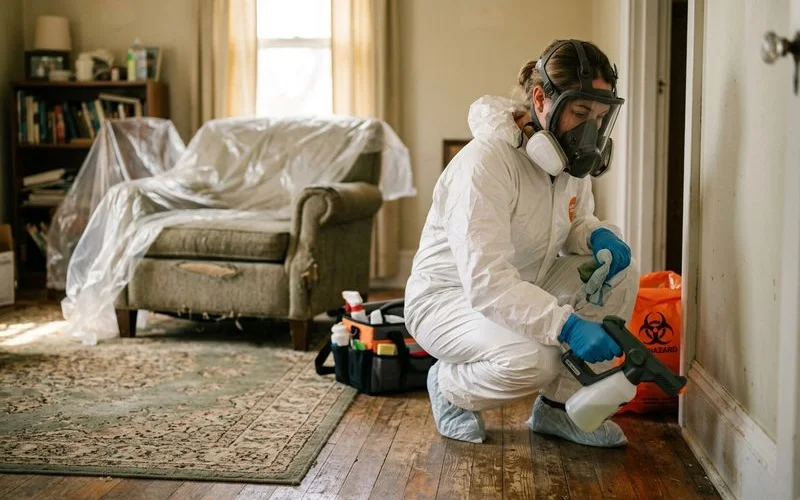
- Biohazard exposure: Animal waste, human fluids, and rotting food fall under the OSHA Bloodborne Pathogens standard (29 CFR 1910.1030). These materials demand strict commercial remediation protocols.
- Airborne pathogens: Disturbing deep layers of debris releases mold spores, hantavirus from rodent droppings, and concentrated allergens.
- Structural instability: Subfloors rot under the sheer weight of tightly packed goods and hidden water leaks.
- Hidden sharps: Used syringes, rusted blades, and shattered glass routinely hide beneath clothing piles.
- Chemical reactions: Old cleaning solvents and expired household chemicals often leak, creating toxic vapor pockets.
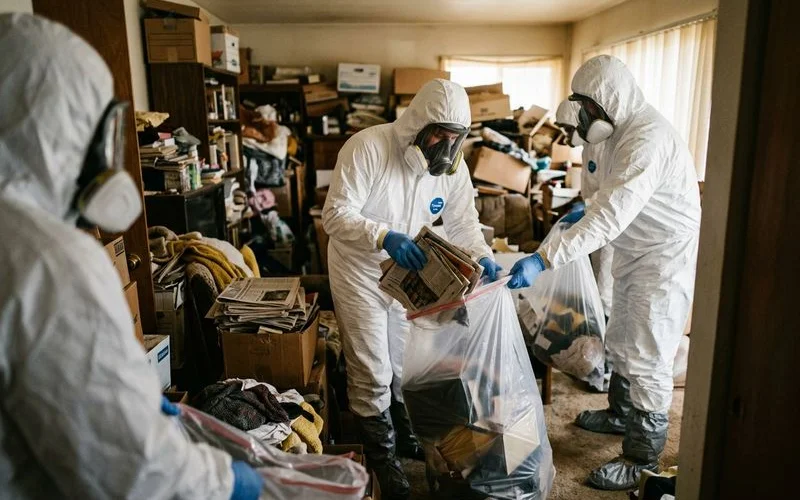
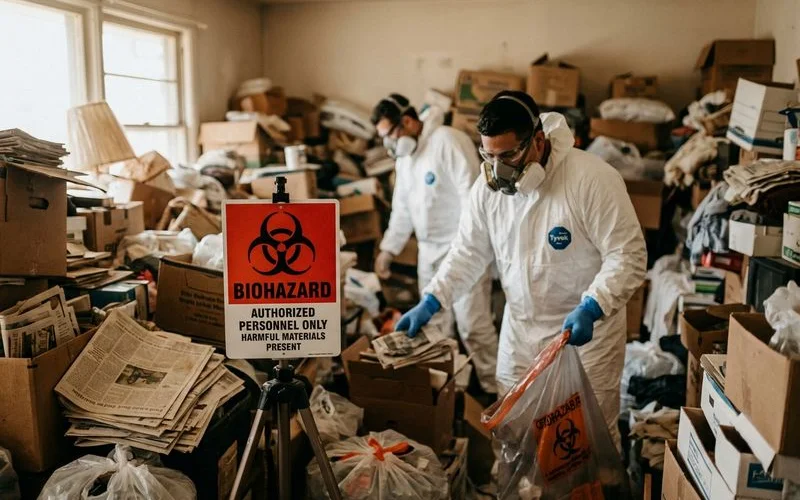
Our technicians carry specific certifications to handle dangerous environmental conditions safely. Every field technician must wear heavy-duty personal protective equipment (PPE).
This gear includes full-body Tyvek suits, P100 particulate respirators, and puncture-resistant boots. Standard cleaners simply walk in wearing polo shirts and aprons.
Emotional Support and Mental Health
The psychological barrier represents the largest divide between standard maintenance and specialized remediation. A homeowner hiring a weekly maid wants the service and feels relief when the crew arrives.
Clients facing severe accumulation often experience the exact opposite reaction. The American Psychiatric Association added Hoarding Disorder to the DSM-5 manual in 2013, recognizing it as a distinct mental health condition. For individuals living with this disorder, discarding a stack of old magazines triggers severe anxiety, deep grief, or intense anger.
Essential psychological competencies for remediation:
- Applying trauma-informed communication strategies during high-stress moments.
- Understanding the specific diagnostic criteria outlined in the DSM-5.
- Pacing the removal process to prevent psychological flooding.
- Collaborating with licensed US cognitive behavioral therapists.
- Managing tense family dynamics and interpersonal conflicts onsite.
Traditional cleaners lack the psychological framework to process these intense reactions. Pushing a client too fast or forcing them to discard items causes profound emotional damage.
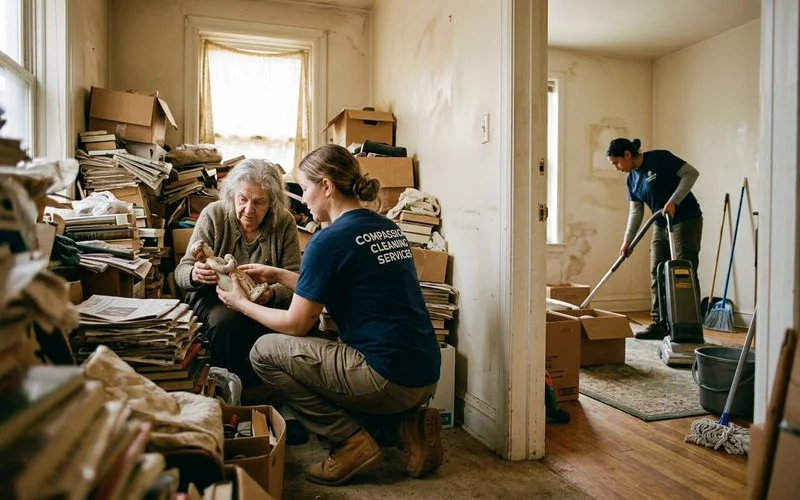
Our crews receive specific coaching on how to speak with individuals in distress. Validating those feelings builds necessary trust to move the project forward safely. We know a broken radio might represent a deep emotional safety net to the owner.
Sorting and Decision-Making Process
Basic housekeeping involves very few critical decisions. Cleaners throw empty wrappers in the bin and leave everything else untouched.
Hoarding situations require thousands of micro-decisions every single hour. Crews must categorize every single object in the house into keep, donate, recycle, or hazardous waste piles.
Common challenges during the sorting phase:
- Locating critical financial paperwork buried in decades of junk mail.
- Identifying documents requiring the IRS standard 7-year retention rule.
- Separating actual garbage from items holding intense sentimental value.
- Evaluating seemingly worthless items for hidden jewelry or cash.
- Quarantining contaminated objects for biohazard processing.
We regularly uncover thousands of dollars in cash hidden inside old paperbacks or jacket pockets. A rushing maid service throws those books directly into the trash bag. Specialized teams use methodical clearing tactics to protect your family assets.
Disposal and Commercial Logistics
Standard maids generate maybe two extra bags of garbage for your municipal Friday pickup. Remediation teams coordinate massive logistical operations moving tons of material across multiple specialized facilities.
Commercial disposal requirements include:
- Routing 40-yard roll-off dumpsters based on municipal weight limits.
- Following EPA Resource Conservation and Recovery Act (RCRA) guidelines for hazardous waste.
- Coordinating with local US electronic waste recycling centers.
- Delivering salvageable furniture to designated 501(c)(3) charities.
- Securing tax-deductible donation receipts for the estate.
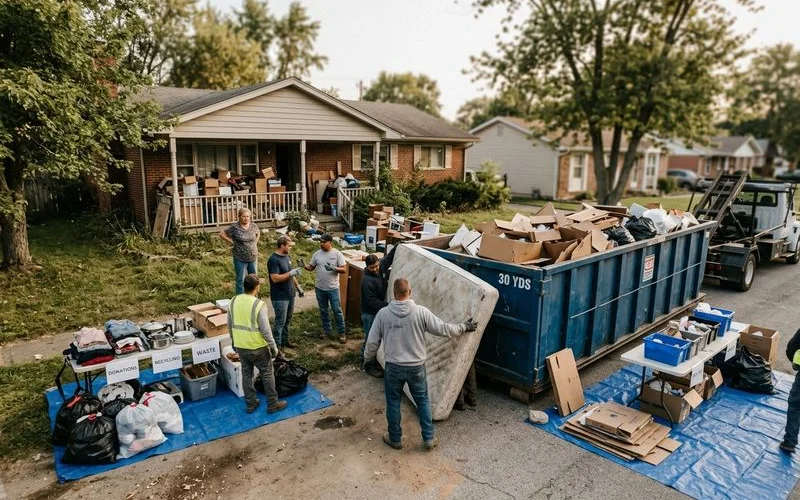
Our team manages the entire supply chain of waste removal from your driveway to the commercial landfill. Landfills in the US charge commercial tipping fees averaging $50 to $60 per ton, requiring accurate weight estimations before the project even begins. Proper logistics prevent unexpected budget overruns.
Hoarding Cleanup vs Regular Cleaning Service: What to Know About Insurance
Typical residential cleaners carry standard business liability policies. These basic plans cover minor accidents, like a broken window or a scratched hardwood floor.
Standard coverage instantly voids if an employee contracts a bloodborne illness or falls through a rotting floorboard. Heavy accumulation jobs demand Contractors Pollution Liability (CPL) and specialized workers’ compensation policies. This commercial-grade insurance protects the homeowner from massive lawsuits if a worker suffers an injury on the hazardous property.
Always request a direct Certificate of Insurance (COI) verifying pollution and biohazard coverage before letting anyone start clearing a property.
We maintain comprehensive environmental liability coverage specifically rated for biohazard and hoarding remediation. Families must protect themselves by verifying this specialized coverage upfront. A standard maid service simply does not carry the millions of dollars in liability protection required for high-risk environments.
Post-Cleanup Services and Long-Term Success
Maid services pack up their supplies and leave the moment the floors shine. Specialized remediation treats the empty house as the starting line for long-term recovery.
Without ongoing intervention, clinical research shows the relapse rate for Hoarding Disorder remains exceptionally high.
Critical post-project support systems:
- Providing documented photo inventories for homeowners insurance claims.
- Connecting families with US-based therapists specializing in Cognitive Behavioral Therapy (CBT).
- Establishing manageable, step-by-step daily maintenance schedules.
- Coordinating with debris removal and clutter organization specialists.
- Scheduling 30-day and 90-day property wellness checks.
Our post-cleanup program actively focuses on preventing recurrence. Building a network of ongoing care prevents the property from returning to a Level 4 hazard a year later. We view the physical cleanout as just one piece of a larger health puzzle.
When a Regular Cleaning Service Is Appropriate
Standard cleaning companies become incredibly valuable partners after the heavy remediation concludes. Once a specialized crew removes the hazards and restores structural access, regular maids help sustain that massive victory.
Many property owners transition to a bi-weekly professional cleaning schedule. Having a scheduled visitor provides excellent accountability and prevents secondary clutter from building back up.
We actively help clients find reliable, bonded cleaning professionals to take over this maintenance phase. Supporting local partners in the Summerville area ensures our clients stay on the path to success.
Making the Right Choice for Your Situation
Choosing the correct vendor comes down to basic functionality and safety. If you can walk through every hallway without turning sideways, and the bathrooms function properly, a traditional maid service fits the bill.
You need a commercial remediation team if the property features blocked exits, foul odors, or visible pest infestations.
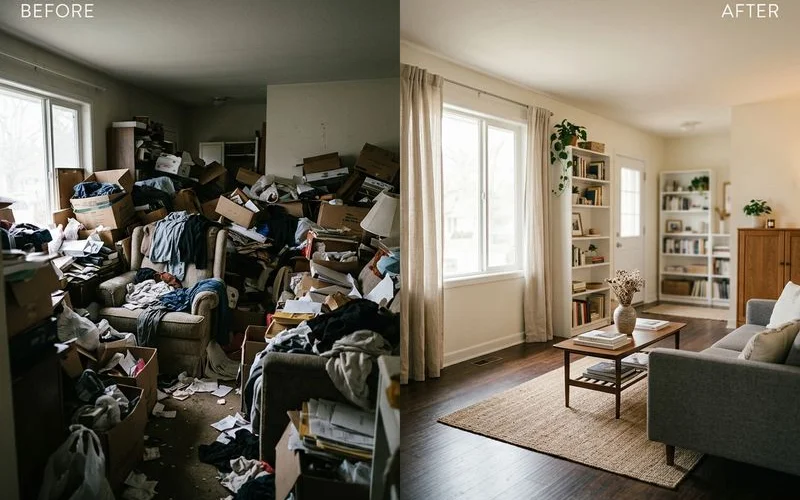
Any situation involving a resident who cries, yells, or panics at the thought of throwing away a newspaper also requires specialized intervention. Do not force a standard cleaner into a highly volatile emotional situation.
Get Expert Guidance
Determining the true hazard level of a family home feels completely overwhelming. A professional evaluation provides clarity and a concrete action plan.
We offer specialized assessments to categorize the exact ICD clutter level of your property. The assessors will tell you immediately if your situation only requires a standard deep clean.
Emergency Support Line: Call us directly at (843) 517-7097 for a free, confidential property assessment in the Summerville and greater South Carolina Lowcountry area.
Deciding between a hoarding cleanup vs regular cleaning service: what path to take ultimately depends on the safety of the environment. Protecting your family remains the absolute top priority. When a property does cross the line into severe accumulation, you need a professional whole-house hoarding cleanup crew equipped to handle the physical and emotional heavy lifting.
Learn more about our approach in our guide on what to expect during a professional hoarding cleanup.