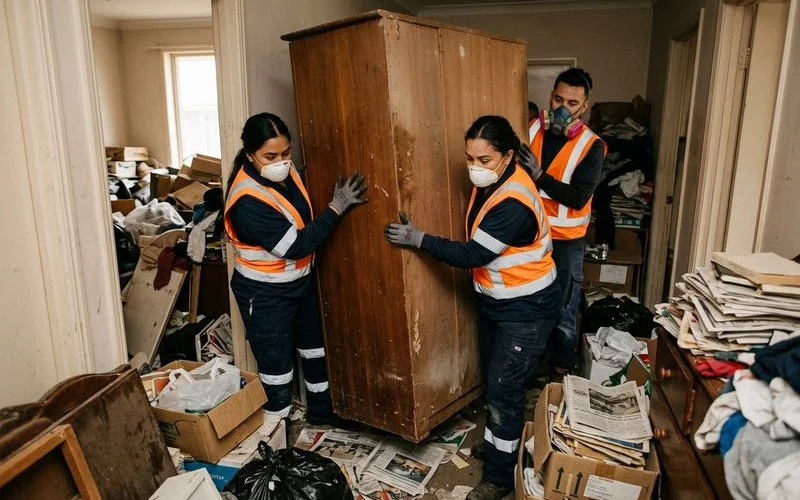
Receiving a code violation notice for hoarding conditions is a highly stressful experience for any homeowner.
The formal letter usually arrives with a strict deadline and explicit threats of escalating legal consequences.
For a family already coping with hoarding disorder, this sudden legal pressure feels completely overwhelming.
As a professional service team at Summerville Hoarding Cleanup, we see this exact scenario play out every week across the Lowcountry.
Understanding the specific rules surrounding Hoarding and Code Violations in South Carolina can transform a panic-inducing notice into a manageable problem.
Let’s break down the exact property codes, outline your specific legal rights, and show you the precise steps required to resolve the issue.
How Hoarding Situations Come to the Attention of Code Enforcement
Code enforcement officers rarely patrol neighborhoods looking for messy homes.
Property maintenance enforcement in South Carolina is almost entirely a complaint-driven process.
Our team often finds that municipal investigations begin only after a specific incident draws outside attention to the home.
The most frequent triggers include reports from the following sources.
- Neighbors. Smells and pests are the biggest triggers for neighbor complaints. The intense South Carolina summer heat quickly amplifies odors from waste or organic matter, making the issue impossible to ignore.
- Emergency responders. Paramedics and firefighters will report a home if they cannot safely maneuver a stretcher through the hallways. National Fire Protection Association (NFPA) standards require clear exits, and local fire marshals take blocked doors very seriously.
- Social services. Caseworkers from the South Carolina Department of Social Services (SCDSS) or Adult Protective Services (APS) will report severe self-neglect if the environment poses an immediate health risk to a vulnerable adult.
- Utility workers. Meter readers for companies like Dominion Energy or Charleston Water System often flag properties if accumulated items prevent access to essential equipment.
South Carolina Property Maintenance Codes
South Carolina does not have a single statewide law dedicated solely to hoarding.
Municipalities address these complex situations through a patchwork of local property maintenance codes, building codes, and fire regulations.
International Property Maintenance Code
Many South Carolina cities, including Charleston, use a version of the International Property Maintenance Code (IPMC).
This universal code establishes the minimum baseline requirements for keeping residential structures safe and sanitary.
Code enforcement officers typically cite very specific sections of the IPMC when issuing a formal violation.
| IPMC Section | Code Focus Area | Common Hoarding Violation Example |
|---|---|---|
| Section 302 | Exterior Property Areas | Accumulation of garbage, junk, or debris in the front yard. |
| Section 305 | Interior Structure | Excessive weight loads damaging floor joists or load-bearing walls. |
| Section 702 | Means of Egress | Blocked hallways, barricaded doors, or inaccessible emergency escape windows. |
Local Ordinances in the Lowcountry
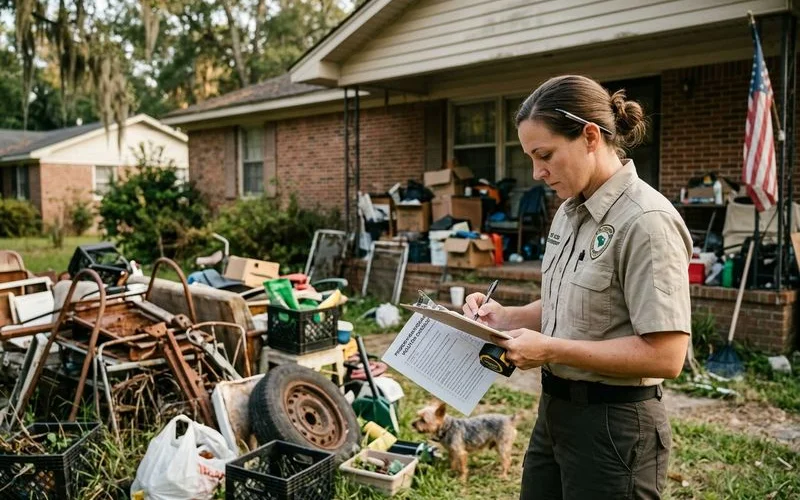
Individual municipalities in the Charleston area enforce their own specific property rules.
The Town of Summerville handles exterior accumulation and yard maintenance violations through its dedicated code enforcement division.
The City of Charleston requires owners to answer directly to the Livability Court for serious property maintenance infractions.
Understanding your specific local jurisdiction is the crucial first step to forming a solid response strategy.
What Happens After a Code Violation Is Issued
The municipal enforcement process in South Carolina generally follows a highly predictable timeline.
Initial Notice
The property owner receives a formal written notice detailing the exact code violations and the required compliance deadline.
Officers typically deliver this notice via certified mail or post it directly on the front door of the property.
Initial compliance deadlines in the Lowcountry usually range from 14 to 30 days, depending entirely on the severity of the hazard.
Inspection and Follow-Up
The code enforcement officer will conduct a mandatory follow-up inspection once the initial deadline expires.
If the property meets the required safety standards, the city closes the case entirely.
If the hazardous conditions persist, the enforcement process moves rapidly to the next punitive phase.
Escalation
Ignoring a municipal notice guarantees that the consequences will escalate rapidly.
Municipalities can levy heavy daily fines for ongoing non-compliance, often ranging from $100 to $500 per day.
Charleston municipal court fines can reach over $1,000 per offense if a property owner is found guilty in Livability Court.
In the absolute worst-case scenario, the city might condemn the property and legally force the occupant to vacate the premises entirely.
Your Rights During Code Enforcement Proceedings
Property owners in South Carolina retain significant legal rights during any municipal investigation.
We always remind families that they have distinct options and protections under the law.
Understanding these rights helps level the playing field and reduces anxiety.
- Right to due process. You must receive proper, documented notice of all violations and specific legal deadlines.
- Right to privacy. Code officers cannot force their way inside your home. The Fourth Amendment requires them to obtain your explicit consent or an administrative warrant to conduct an interior inspection.
- Right to appeal. Most local governments give you 10 to 30 days to officially contest a violation or request a formal hearing before a judge.
- Right to request extensions. Officers frequently grant timeline extensions if you can prove you are making a documented, good-faith effort to clean the property.
Responding Effectively to a Hoarding-Related Code Violation
Taking immediate, organized action is the absolute best way to satisfy a code enforcement mandate.
Based on our field experience, a structured approach yields the best results with municipal officers.
Follow these specific steps to regain control of the situation and avoid heavy fines.
Step-by-Step Compliance Strategy
1. Read the notice carefully. Identify the exact codes cited and the final deadline date. Focus only on the items listed on the paper.
2. Contact the officer. Call the specific code enforcement officer listed on the paperwork. Proactive communication shows you are taking the complaint seriously.
3. Get a professional assessment. A legitimate hoarding cleanup company can accurately estimate the time, labor, and dumpster space required to fix the issue.
4. Submit a written plan. Present the officer with a formal cleanup timeline provided by your chosen contractor. This proves you have hired professional help.
5. Start the work. Begin clearing the most critical safety hazards immediately to show visible, undeniable progress.

How Emergency Cleanup Helps With Code Violations
A fast-approaching compliance deadline requires a completely different strategy than a standard decluttering project.
Municipal deadlines do not leave room for months of slow, methodical sorting.
Our emergency hoarding services at Summerville Hoarding Cleanup are specifically structured to handle these high-pressure municipal deadlines.
This specialized triage approach focuses entirely on resolving the cited violations first.
If the fire marshal cited blocked exits, the crew immediately prioritizes clearing 36-inch pathways to all exterior doors.
Code officers respond very favorably to this strategy because it instantly mitigates the immediate life-safety risks.
Common Code Violation Scenarios in the Lowcountry
Certain property conditions consistently trigger municipal complaints in the Charleston area.
Exterior Accumulation
Items stored on porches, in driveways, or under carports are highly visible to neighbors and passing patrol cars.
Cardboard and fabric deteriorate rapidly in the humid South Carolina climate, creating an immediate eyesore.
Homeowners Associations (HOAs) frequently report exterior accumulation to the city if their own letters go ignored.
Fire Safety Violations
Fire marshals issue citations for blocked exits, excessive combustible materials, and disconnected smoke detectors.
These violations carry the strictest, fastest deadlines because they pose an imminent threat to human life.
Creating clear walking paths is always the primary goal when addressing fire code citations.
Sanitation and Pest Issues
Severe hoarding often attracts rodents, roaches, and destructive Formosan subterranean termites.
When an infestation spreads from a hoarded home to a neighboring property, a sanitation violation is an absolute certainty.
Officers will demand professional pest control intervention alongside the physical removal of waste.
Structural Concerns
The sheer physical weight of thousands of accumulated items can easily stress floor joists and damage load-bearing walls.
Officers will issue severe structural citations if they see sagging porches, broken windows, or failing rooflines.
These specific violations often require a licensed general contractor to repair the damage after the cleanup is finished.
Preventing Code Violations
Taking proactive measures is far cheaper and less stressful than dealing with a municipal court summons.
Families can easily avoid official scrutiny by managing the most visible warning signs.
| Proactive Action to Take | Hazardous Action to Avoid |
|---|---|
| Keep all front yards, driveways, and side yards completely clear of debris. | Storing indoor furniture, appliances, or cardboard boxes on exterior porches. |
| Ensure all exterior doors can open fully without any obstruction. | Blocking street-facing windows with tall stacks of accumulated items. |
| Maintain active pest control and regular, weekly garbage service. | Allowing vegetation to overgrow to the point it hides the physical structure. |
Getting Help in the Lowcountry
Facing a legal mandate to clean a hoarded home is a massive undertaking.
You do not have to manage the intense cleanup labor, the strict legal timelines, or the emotional stress entirely alone.
We understand the specific enforcement procedures in Summerville, Charleston, Goose Creek, and North Charleston.
A simple phone call is the easiest first step toward securing your property and satisfying the city inspectors.
Contact Summerville Hoarding Cleanup at (843) 517-7097 to discuss your exact situation.
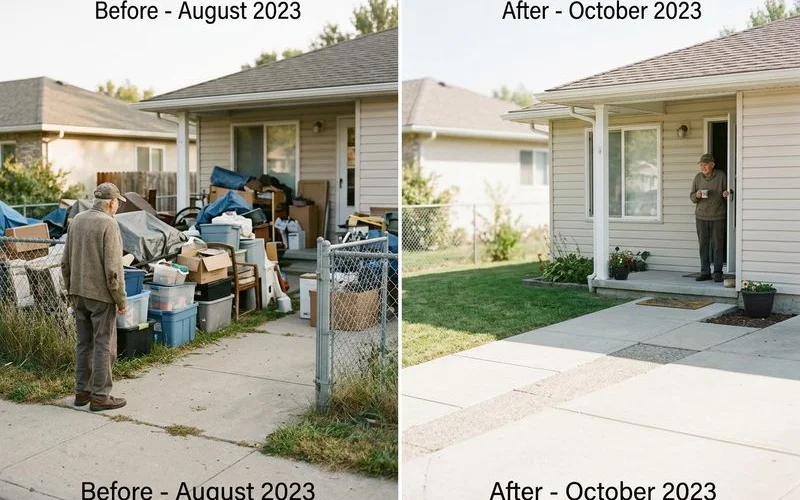
A professional, organized plan will get the city off your back and provide a safe, functional home.