You know how frustrating it is when a single room disrupts your entire daily routine. The process of restoring a kitchen after hoarding: from unusable to fully functional, requires a specific, proven approach. The kitchen is often the room most severely affected by hoarding conditions.
When a kitchen becomes unusable, the person living in the home loses the ability to prepare meals safely. Storing food properly and maintaining basic hygiene standards around food handling become impossible tasks.
As a professional service team serving families across the Summerville and Charleston area, we have encountered kitchens in every stage of deterioration. From countertops buried under months of accumulated items to spaces with extensive structural damage, the challenges are always unique.
Let’s look at the specific factors that make kitchens so vulnerable and then walk through the exact steps required to return the space to full functionality.
Why Kitchens Are Hit Hardest
Several factors make kitchens particularly vulnerable to the effects of hoarding disorder. Understanding these factors helps explain why kitchen restoration is often the most complex part of a cleanup project.
- Moisture and humidity. Kitchens generate more moisture than any other room in the home. The U.S. Environmental Protection Agency notes that mold can begin growing within 24 to 48 hours on damp surfaces. When blocked ventilation traps this moisture, accelerated mold growth and warped cabinetry follow.
- Food waste. Expired food and open packages attract pests like German cockroaches. In hoarding environments, these biological contaminants may accumulate for months without removal.
- Grease accumulation. Unattended cooking is the leading cause of kitchen fires according to the National Fire Protection Association. In a hoarding environment, pervasive grease buildup creates an extreme fire hazard while trapping dust and bacteria.
- Appliance failure. Blocked access prevents basic maintenance. A refrigerator that stops working leads to rotting food, while a leaking dishwasher creates severe water damage.
- Plumbing issues. Inaccessible under-sink plumbing means leaks go undetected for extended periods. This causes extensive water damage and potential structural failure in the subflooring.
Phase 1: Assessment and Safety Evaluation
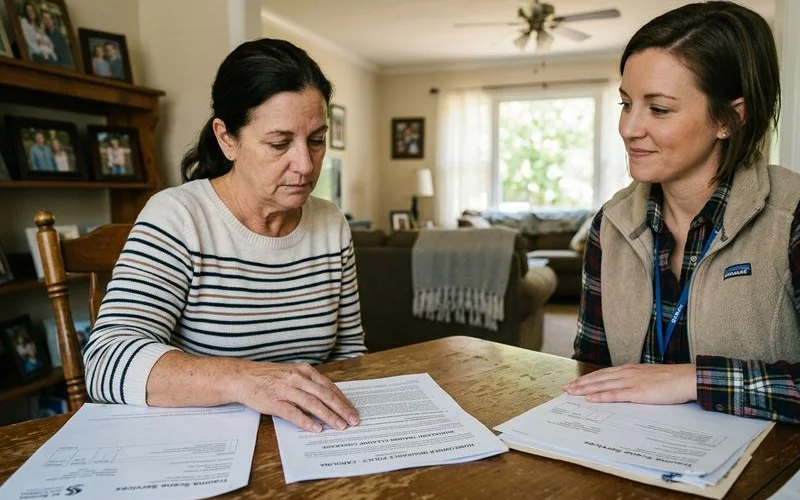
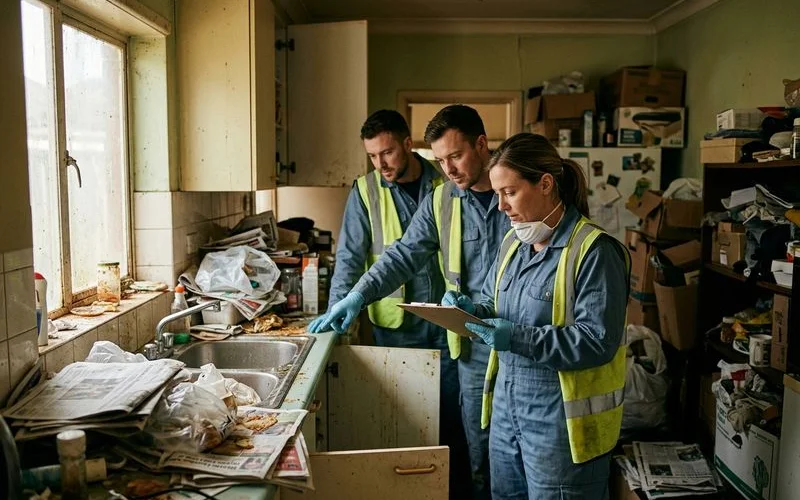
Before any restoration work begins, our team conducts a thorough assessment of the kitchen’s condition. This initial survey is far more detailed than a general home inspection because kitchens present unique hazards.
We rely on advanced technology to uncover hidden problems. For example, pinless moisture meters use radio frequencies to detect water damage behind cabinets without drilling destructive holes.
- Condition of plumbing, under-sink areas, and hidden water damage
- Status of major appliances, electrical outlets, and lighting systems
- Presence of mold on surfaces, inside cabinets, and behind walls
- Evidence of active pest infestations or biological contamination
- Structural integrity of flooring, cabinetry, and countertops
- Functionality of ventilation and exhaust fans
Based on this data, we develop a specific action plan. For severe cases, treating this room as a separate phase of the overall whole-house hoarding cleanup ensures it receives the focused attention it requires.
Phase 2: Clearance and Item Removal
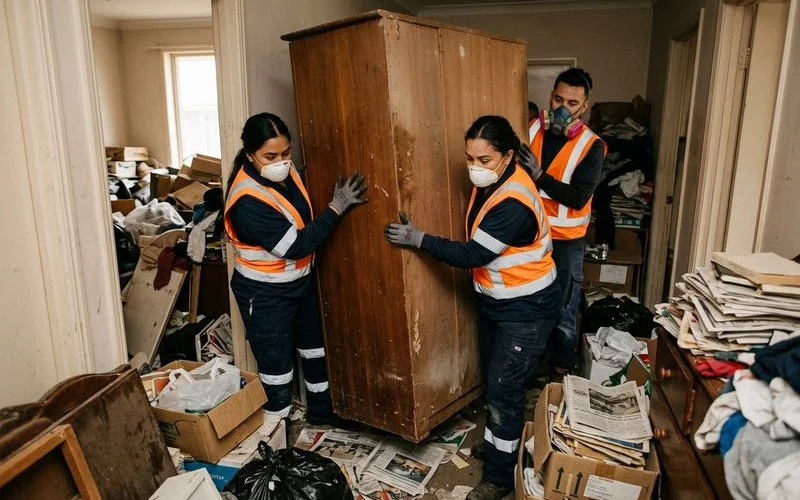
The first active step in kitchen restoration is removing everything from the space. This means clearing every item on every surface, inside every cabinet, and stacked on top of appliances.
We regularly clear spaces containing thousands of individual items. Heavy-duty supplies are absolutely essential here. Our crews use thick 3-mil contractor bags to safely transport heavy or sharp debris without tearing.
- Systematic removal of loose items from surfaces and floors
- Emptying all cabinets, drawers, and appliance interiors
- Separating items into keep, donate, and discard categories
- Discarding all expired or compromised food products
Food safety is a major priority during this sorting process. According to federal food safety guidelines, any perishable items left in the temperature danger zone between 40 and 140 degrees Fahrenheit must go. We err on the side of caution and discard anything stored near pest activity.
Phase 3: Hazard Remediation
Once the kitchen is cleared of items, the underlying conditions become fully visible. This is frequently the point where the full extent of the damage reveals itself. Behind appliances and under flooring, conditions are often much worse than the surface suggested.
We address each hazard according to strict industry standards. The EPA explicitly states that any mold contamination covering more than 10 square feet requires professional remediation and proper containment protocols.
- Mold colonies on walls behind cabinets and appliances
- Water damage to subflooring around sinks and dishwashers
- Active pest nests in wall cavities and cabinet corners
- Grease accumulation thick enough to constitute a fire hazard
Pest-related contamination requires sanitization with specialized products. Our technicians consult the EPA List G to select registered antimicrobial disinfectants proven effective against foodborne pathogens like human norovirus.
For kitchens with significant biohazard conditions, certified technicians handle the work. Proper containment and disposal procedures keep the rest of the home completely safe.
Phase 4: Deep Cleaning and Sanitization
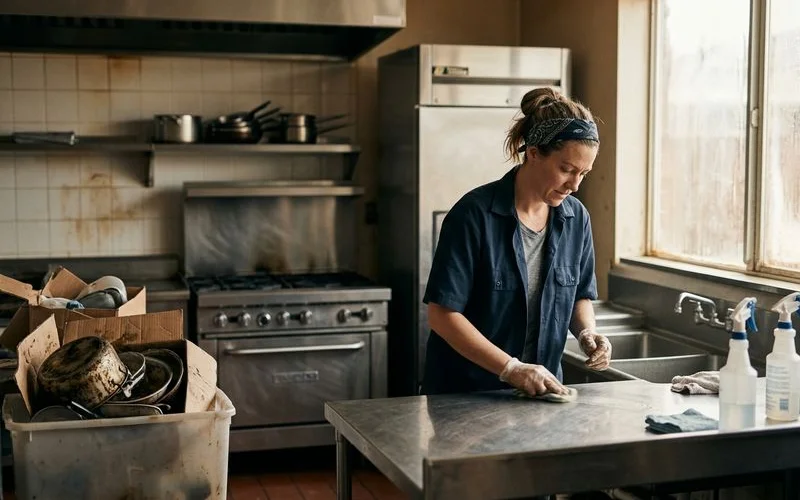
After hazards have been addressed, the kitchen undergoes a comprehensive deep cleaning. This process restores surfaces to a sanitary condition that standard household sponges simply cannot achieve.
We utilize professional-grade steam cleaners that reach temperatures high enough to melt away years of baked-on grease.
- Sanitizing all cabinet interiors, exteriors, and hardware
- Stripping countertops of accumulated residue
- Cleaning floors to the base material, focusing on grout lines
- Scrubbing appliance surfaces inside and out
- Treating backsplashes, walls, and light fixtures
Visual cleanliness is only the first step. Every surface that contacts food must meet strict safety standards.
We verify this clean state using ATP testing and luminometers. These devices measure Relative Light Units to confirm biological contaminants are eliminated, ensuring the space is truly safe for cooking again.
Phase 5: Appliance Evaluation and Restoration
With the kitchen cleaned, each appliance is evaluated to determine if it can be safely restored. We provide honest assessments based on current reliability data.
A 2026 report from Consumer Reports notes that standard refrigerators typically last 10 to 14 years. If a unit is near the end of that lifespan and requires significant work, replacement is usually the smarter financial choice.
| Appliance Component | Repair Indicator | Replace Indicator |
|---|---|---|
| Refrigerator Seals | Minor gaps or dirt accumulation | Torn seals and compressor failure |
| Oven Heating Elements | Uneven baking but functional controls | Gas connection issues or sparking |
| Dishwasher Drainage | Clogged filters or blocked spray arms | Cracked tub or bad motor |
Appliances that pass the safety check are thoroughly tested. Those posing fire or health risks are immediately documented for removal.
In the Summerville area, we coordinate with local repair services to facilitate necessary replacements. Connecting clients with refurbished appliance organizations is another way our team helps manage tight budgets.
Phase 6: Functional Restoration
The final phase transforms a clean room back into a highly functional workspace. This involves organizing the kept items and setting up logical storage systems.
We highly recommend creating dedicated zones for prep, cooking, and storage to streamline daily routines. Using clear, airtight OXO containers for pantry goods keeps pests out and makes inventory obvious at a glance.
- Organizing kept items in logical cabinet locations
- Setting up a practical pantry arrangement
- Testing all plumbing fixtures and electrical outlets
- Stocking basic cleaning supplies for ongoing maintenance
A well-organized kitchen is vastly easier to maintain. The system established here becomes the critical framework for ongoing upkeep.
Timeline for Kitchen Restoration
Restoration timelines vary based on the extent of the damage discovered. We use the Institute for Challenging Disorganization Clutter-Hoarding Scale to estimate project duration accurately.
Kitchens typically lose basic functionality around Level 3 of this 5-level scale. Here are general timeframes based on our experience in the Lowcountry.
| ICD Scale Level | Condition Description | Estimated Timeline |
|---|---|---|
| Level 2 to 3 | Moderate clutter, limited workspace | 1 to 3 days |
| Level 3 to 4 | Severe blockage, sanitation issues | 3 to 7 days |
| Level 4 to 5 | Extreme damage, structural concerns | 1 to 3 weeks |
These timelines often extend if structural repairs are needed. Appliance deliveries or extended drying periods for mold remediation will also add days to the schedule.
The Impact of a Restored Kitchen
The difference a functional cooking space makes in someone’s quality of life is profound. When the room is restored, the occupant can finally prepare nutritious meals.
Relying on fast food or risking illness from unsanitary preparation areas becomes a thing of the past.
Beyond the practical benefits, a clean kitchen frequently becomes a powerful symbol of recovery. It provides tangible proof that positive change is entirely possible.

Preventing Kitchen Regression
Restoring a kitchen requires a significant investment of time and resources. Protecting that investment depends entirely on establishing a consistent maintenance routine.
We strongly encourage adopting the “One In, One Out” rule to prevent new items from overwhelming the cabinets. Breaking chores into smaller, manageable chunks prevents feelings of overwhelm.
- Daily: Wipe surfaces after use and take out food waste.
- Weekly: Clean the refrigerator and sweep the floors.
- Monthly: Check under sinks for leaks and deep clean the oven.
These habits are simple individually but powerful collectively. Combined with professional therapeutic support, they build a solid foundation for lasting success.
Restoring a Kitchen After Hoarding: From Unusable to Fully Functional
If a home has been affected by severe clutter, Summerville Hoarding Cleanup has the specialized expertise to help. Our kitchen and bathroom recovery service is designed specifically for these challenging environments.
Trained professionals handle the technical cleanup while respecting the emotional dimensions of the work. The journey of restoring a kitchen after hoarding: from unusable to fully functional, is entirely possible with the right approach.
Call us at (843) 517-7097 to schedule a free, confidential assessment. We will evaluate the space and develop a customized plan for your exact needs.