We often see how quickly a difficult situation can escalate into a dangerous one. Understanding why trauma scene cleanup requires specialized professionals is the first step in protecting your family. Families dealing with the aftermath of a traumatic event usually default to calling a standard cleaning service.
This instinct makes complete sense in a moment of crisis.
The consequences of treating biological hazards like everyday messes are severe.
Our team at Summerville Hoarding Cleanup provides specialized trauma and unattended death cleanup across the Lowcountry. Untrained individuals face immense health risks when attempting a DIY sanitation approach. We have witnessed these devastating impacts on local families.
This guide will walk you through the data, the regulatory requirements, and the exact methods necessary to restore a property safely.
What Makes a Trauma Scene Different
A trauma scene involves blood, bodily fluids, tissue, or other potentially infectious materials (OPIM). The federal government defines these strict categories through OSHA’s Bloodborne Pathogen Standard (29 CFR 1910.1030). These materials result from unattended deaths, suicides, accidents, or hoarding situations.
Our crews regularly encounter biological hazards that pose genuine threats to human health. The CDC confirms that the Hepatitis B virus can survive on environmental surfaces for at least 7 days outside the body. This extended survival rate turns an improperly cleaned room into a long-term infection risk.
We also handle the bacterial hazards and toxic gases introduced by decomposition. These are documented dangers that cause serious illness in people lacking proper protection.
What qualifies as a trauma scene requiring professional cleanup:
- Any location where blood or bodily fluids are present in quantity
- Scenes involving decomposition of any duration
- Locations where violent incidents have occurred
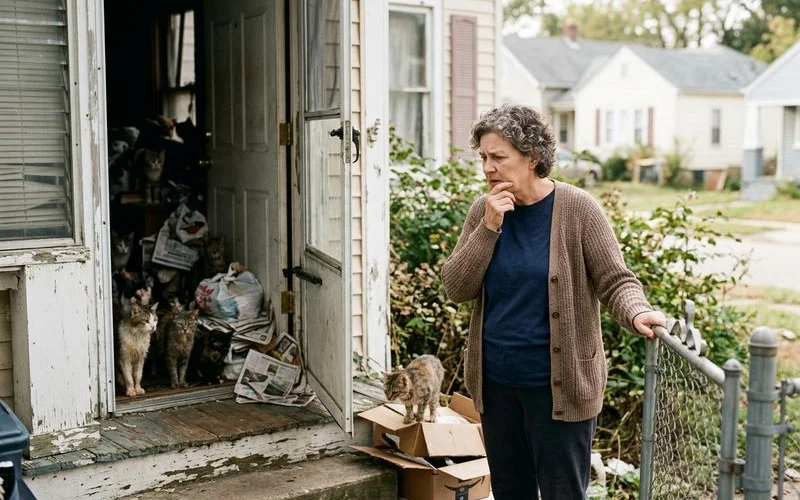
- Areas contaminated by hoarding related biohazards
- Scenes involving chemical contamination from methamphetamine production
- Any situation where infectious disease exposure is a concern
The Training Difference
OSHA Bloodborne Pathogen Training
Every member of a biohazard crew must complete rigorous certifications. Our technicians undergo comprehensive OSHA Bloodborne Pathogen training before stepping foot on a site. This curriculum covers the identification of pathogens, proper disposal of personal protective equipment, and strict exposure control protocols.
These certifications are renewed annually to keep pace with evolving safety standards. A standard house cleaner simply does not possess this highly specialized education. We prioritize continuous training to ensure zero cross contamination.
Hazardous Materials Handling
Biohazard professionals are trained in the exact classification and transportation of dangerous waste. The South Carolina Department of Health and Environmental Control dictates strict regulations that prohibit dumping red bag waste in standard trash dumpsters. We partner exclusively with licensed medical waste facilities to ensure full legal compliance.
Improper disposal violates state laws and triggers heavy penalties. Property owners can face significant legal liability if an unqualified cleaner mishandles these materials. Our process eliminates that risk completely.
Scene Assessment and Safety Planning
Biohazard experts must assess the scene to identify all hidden dangers before cleanup begins. Our site specific safety plans map out the entire scope of contamination. This assessment evaluates structural integrity, tests air quality, and outlines a safe sequence of operations.
Standard cleaning services lack the tools to perform these deep evaluations. Workers face severe exposure risks without a proper initial assessment. We never skip this foundational step.
The Equipment Difference
Personal Protective Equipment
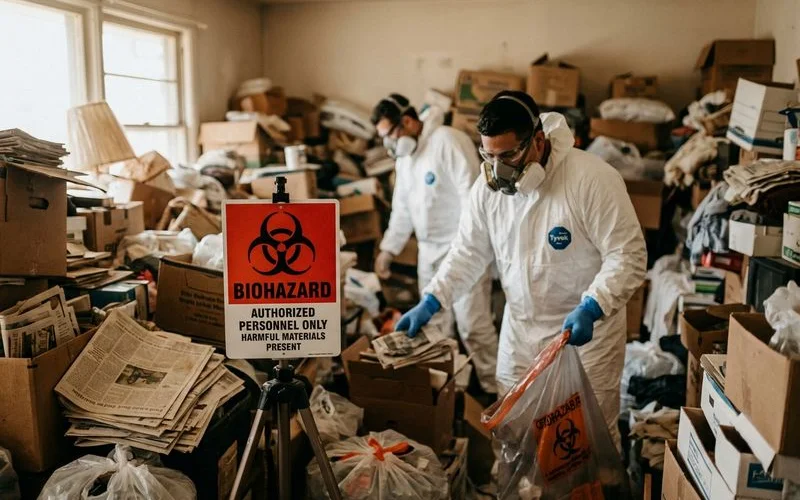
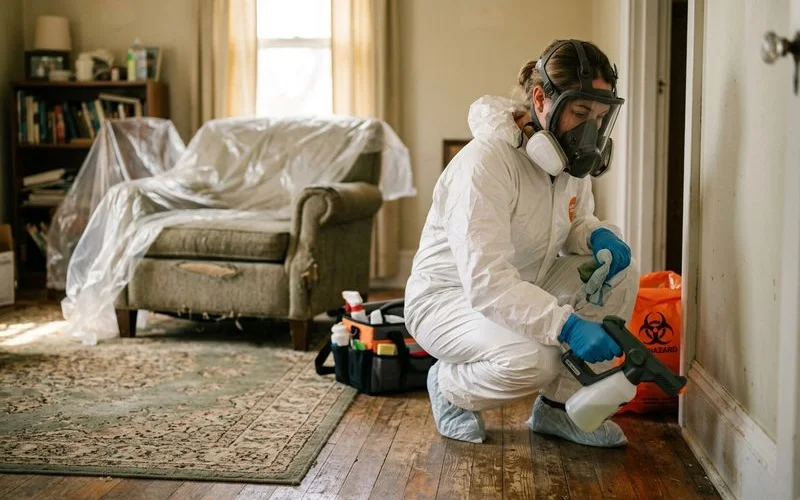
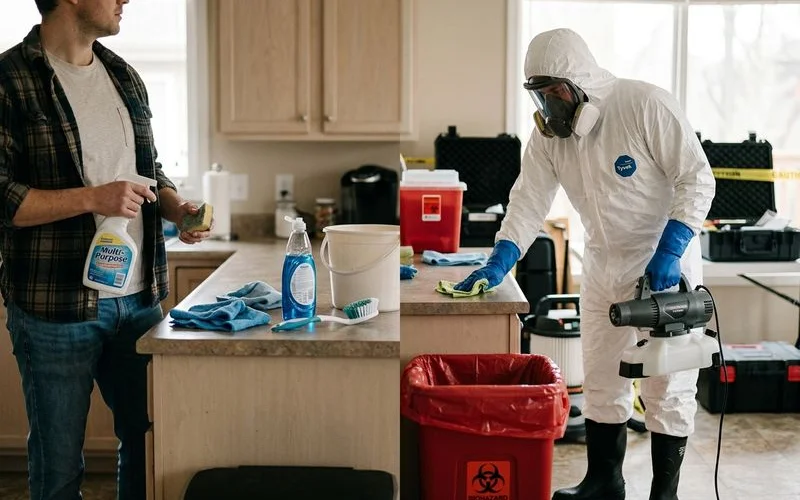
Biohazard teams wear specialized gear to block biological contact. Our technicians use heavy duty Tyvek suits, double layered nitrile gloves, and full face respirators equipped with HEPA filters. Single use protective equipment prevents hazardous materials from leaving the containment zone.
This gear is treated as biohazardous waste immediately after each job. A standard cleaning company cannot justify the expense of this disposable equipment. We invest heavily in proper gear to protect both our staff and the surrounding community.
Cleaning and Disinfection Agents
Standard grocery store products only remove surface level dirt and grease. Our remediation process relies on hospital grade, EPA registered disinfectants proven to eliminate bloodborne pathogens. Enzymatic cleaners are required to break down biological proteins at the molecular level.
Chemical agents must penetrate porous materials like wood and concrete where fluids soak in. Regular bleach cannot reach these deep layers of contamination. We utilize specific odor counteracting formulas designed exactly for decomposition chemistry.
Detection and Verification Equipment
Visual inspections are useless for verifying a biologically clean surface. Our crews utilize ATP bioluminescence testing to detect invisible cellular residue. The manufacturer Hygiena sets strict scientific limits for these hygiene readings.
Any surface measuring above 30 Relative Light Units requires immediate additional decontamination. A standard cleaning crew has no way to provide this scientific verification. We rely on hard data to prove a room is completely safe for habitation.
Air Quality Management
Airborne hazards pose a constant threat during a decomposition cleanup. Our negative air machines feature HEPA filters to create controlled airflow and prevent cross contamination. Hydroxyl generators actively neutralize airborne pathogens and compounds safely.
Standard vacuums and fans simply blow dangerous particles into clean areas. These advanced air scrubbing units require specialized operational knowledge. We deploy these systems immediately to stabilize the indoor environment.
The Regulatory Difference
OSHA Requirements
Federal law mandates strict adherence to the Bloodborne Pathogen Standard for all exposed workers. Our safety protocols include a written Exposure Control Plan, hepatitis B vaccinations, and detailed incident records. OSHA enforces these rules through aggressive site inspections.
General cleaning companies operating outside their scope face devastating consequences. The average OSHA serious violation fine reached over $16,000 in 2026. We maintain flawless compliance to protect our clients from these regulatory nightmares.
Waste Disposal Regulations
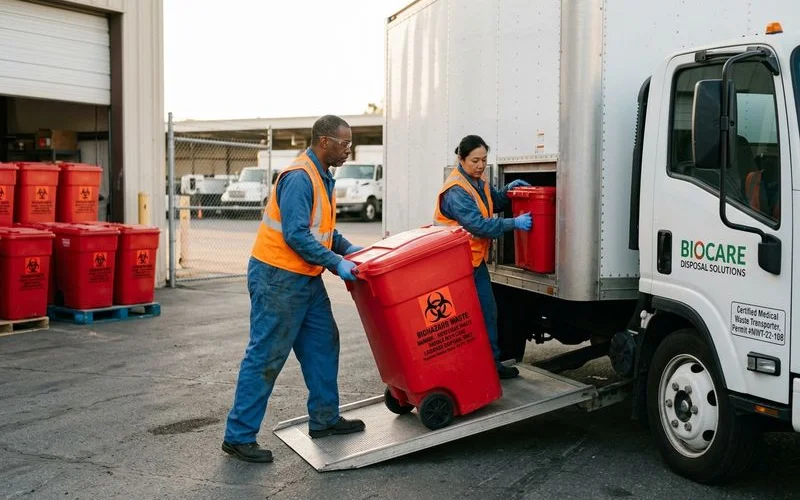
The state dictates the exact lifecycle of biohazardous waste. Our compliance team ensures all materials are secured in approved red bags and rigid leak proof containers. These items are transported by licensed carriers and processed at certified medical waste treatment facilities.
Dumping these materials into a standard landfill invites severe state enforcement actions. Regular janitorial services lack the infrastructure for this highly regulated disposal chain. We manage the entire manifest process from generation to final destruction.
Insurance and Liability
Standard commercial insurance policies exclude damages related to biohazardous materials. Our company carries specific general liability coverage with biohazard endorsements and pollution liability policies. This comprehensive insurance protects the property owner if any secondary issues arise.
A homeowner assumes massive legal exposure if a regular cleaner becomes infected on their property. Specialized coverage is the only way to shield a family from lawsuits. We provide our certificates of insurance upfront to guarantee total transparency.
The Emotional Intelligence Difference
Discretion and Privacy
Privacy is the most critical element of our service during a crisis. Our teams arrive in unmarked vehicles and wear plain clothing over protective suits until safely inside. Neighbors and bystanders have no reason to suspect the nature of the emergency.
A stigmatized event like a suicide demands absolute confidentiality. Families deserve the space to grieve without public spectacle. We treat every detail of the case as strictly classified information.
Communication and Compassion
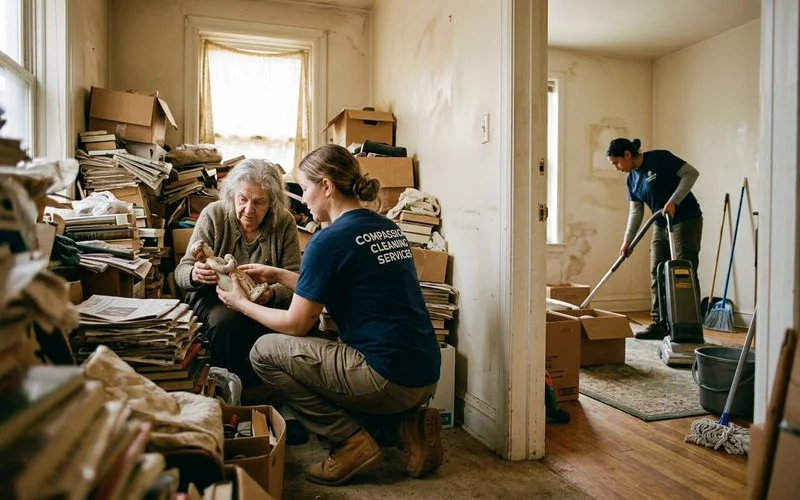
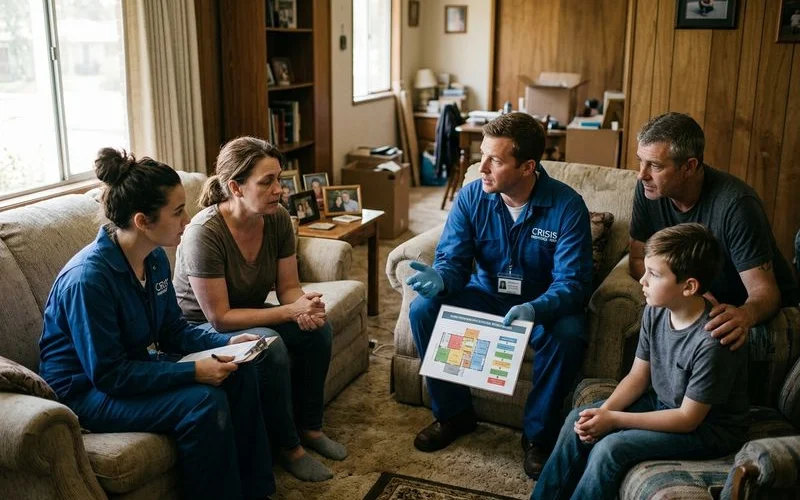
Clear and gentle communication helps stabilize a chaotic situation. Our technicians explain the remediation process calmly without using graphic or alarming language. Grieving individuals often need information repeated as they process shock.
Standard cleaning crews treat the home simply as a mess to wipe up. A purely transactional approach ignores the severe emotional weight of the situation. We recognize that we are stepping into a family’s darkest moment.
Respect for the Deceased and the Space
Every trauma scene requires deep reverence for the life that was lost. Our crews operate with the understanding that this space was someone’s cherished home. A clinical approach to cleaning must never erase human dignity.
Careless tossing of personal items causes unnecessary emotional pain for the surviving relatives. Items that can be safely restored are separated with extreme care. We handle every possession exactly as we would want our own family’s items treated.
Common Misconceptions
Misconception: Bleach Kills Everything
Bleach provides a false sense of security during a biohazard cleanup. Our testing confirms that sodium hypochlorite cannot penetrate porous materials like structural subflooring or drywall. Surface application simply colors the stain while leaving dangerous pathogens thriving underneath.
Deep contamination requires specialized enzymatic treatments. A superficial wipe down guarantees that harmful bacteria will return. We completely remove saturated materials that chemicals cannot save.
Misconception: If It Looks Clean, It Is Clean
Biological contamination operates entirely outside the visible spectrum. Our ATP meters frequently detect massive pathogen colonies on carpets and concrete that look perfectly spotless. Bodily fluids soak deep into crevices immediately upon impact.
Harmful viral matter easily survives on dry surfaces for days or weeks. Trusting the naked eye is a dangerous gamble. We use scientific validation to ensure a space is truly disinfected.
Misconception: The Smell Will Go Away on Its Own
Chemical compounds like cadaverine and putrescine bind tightly to the environment. Our air scrubbers actively neutralize these odor molecules because they will persist indefinitely without intervention. Masking agents only cover the scent temporarily.
A foul odor indicates that microscopic particles of the biohazard are still airborne. Ignoring the smell forces occupants to inhale decaying matter. We eradicate the source to permanently restore fresh air.
Misconception: Any Cleaning Service Can Handle It
A standard janitorial service lacks the infrastructure to manage these crises safely. Our comprehensive training, EPA approved gear, and legal compliance structures separate us entirely from everyday cleaners. Hiring an unqualified crew puts your entire family in jeopardy.
Improper cleanup leaves a home legally uninhabitable and physically dangerous. Property owners will bear the financial brunt of any resulting illnesses. We protect your health and your legal liability simultaneously.
Why Trauma Scene Cleanup Requires Specialized Professionals: Choosing the Right Team
If you need trauma scene cleanup in the Summerville or Charleston area, evaluating a company’s credentials is your first priority. Our checklist ensures you hire a team capable of handling the severe risks involved.
| Feature | Standard Cleaning Service | Professional Biohazard Team |
|---|---|---|
| Primary Focus | Dirt, dust, and general sanitation | Biological hazards, pathogens, and safety |
| Training | General chemical safety | OSHA Bloodborne Pathogen & HAZWOPER |
| Equipment | Standard vacuums, mops, bleach | Negative air machines, ATP meters, HEPA filters |
| Waste Disposal | Municipal trash service | Licensed red bag medical waste facilities |
| Verification | Visual inspection | Scientific ATP bioluminescence testing |
Essential qualifications:
- OSHA Bloodborne Pathogen certification for all crew members
- Proper insurance coverage including biohazard specific endorsements
- Licensed biohazardous waste transportation and disposal
- Professional grade PPE and decontamination equipment
- ATP testing capability for verification
- Experience with decomposition, blood cleanup, and hoarding situations
- References from law enforcement, funeral homes, and property managers
- 24-hour emergency response availability
Red flags to watch for:
- Companies that quote without seeing the scene first
- Lack of biohazard specific certifications or insurance
- No clear plan for biohazardous waste disposal
- Using standard cleaning products rather than EPA registered biohazard agents
- Inability to provide verification testing
Trust Summerville Hoarding Cleanup
For families across the Lowcountry dealing with a trauma scene, true professional remediation restores safety and peace of mind. This guide demonstrated exactly why trauma scene cleanup requires specialized professionals.
Our specialized biohazard unit combines technical competence with genuine compassion. The property is restored to a safe condition while treating everyone involved with absolute dignity.
The last thing a grieving family needs is bureaucratic stress.
We work directly with insurance carriers to streamline claims and reduce your financial burden. Immediate help is available 24/7 at (843) 517-7097. Please reach out to our team when you are facing the unthinkable.