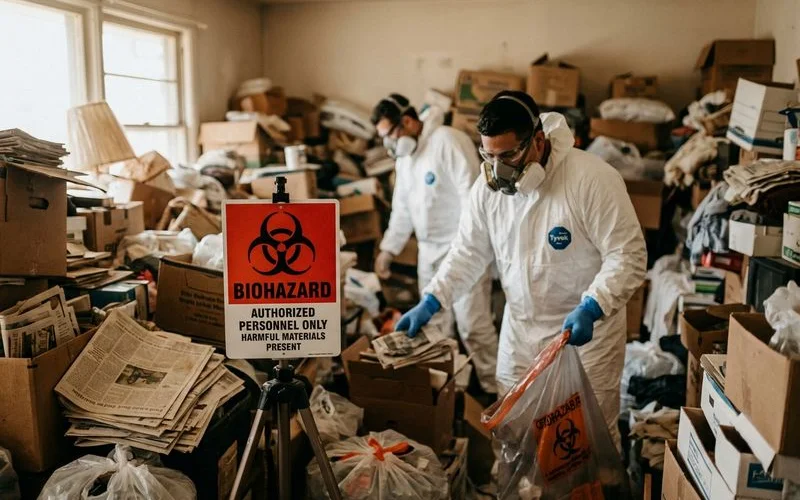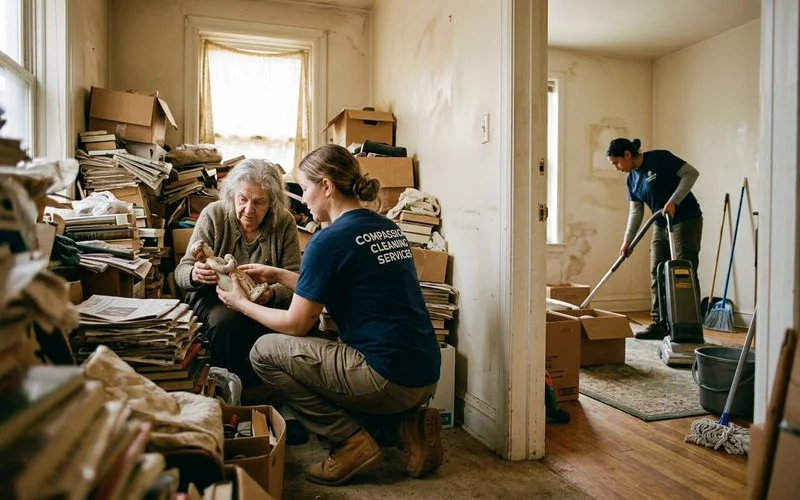
From what I have seen working in homes across the South Carolina Lowcountry, recognizing where a loved one falls on the hoarding scale is the hardest part for families. Understanding the 5 Levels of Hoarding Disorder: A Complete Guide is essential because looking past the surface helps you see the actual risk factors.
We regularly explain to clients that a comprehensive 2025 meta-analysis in Psychology Today revealed hoarding disorder affects roughly 2.5 percent of the population, or about 1 in 40 adults.
That percentage translates to thousands of families in Summerville, Charleston, and surrounding areas struggling with a profoundly misunderstood mental health condition. The National Study Group on Chronic Disorganization (NSGCD), now known as the Institute for Challenging Disorganization (ICD), developed a five-level clutter-hoarding scale to assess these situations. This framework helps cleanup specialists, therapists, and family members determine the appropriate level of intervention.
We use this 2025 updated scale daily to develop customized cleanup plans. Let’s look at the data, what it actually means for a home, and explore a few practical ways to respond to each stage.
Level 1: Household Clutter Within Normal Range
Level 1 on the NSGCD scale represents a home with light clutter that most people would consider within normal limits. The ICD classifies this as a “Green, Low” environment where no specialized knowledge of chronic disorganization is required. Doors, windows, and stairways are fully accessible. All appliances and fixtures work properly, and the home meets standard health and safety codes.
Common characteristics of Level 1:
- Minor clutter in a few rooms
- All rooms are accessible and used for their intended purpose
- No noticeable odors or sanitation issues
- Pets, if present, are properly cared for
- Normal housekeeping routines are maintained
At this stage, professional hoarding cleanup is rarely necessary. Simple organizational strategies, like the “one-in, one-out” rule where a new item replaces an old one, can address early concerns.
We often recommend a visit from a professional organizer to help establish these basic systems. Level 1 is worth noting because hoarding disorder is a progressive condition, and recognizing clutter tendencies early can prevent the situation from escalating.
Level 2: Clutter Begins to Interfere With Daily Living
Level 2 marks the point where clutter starts to noticeably impact the household. One or two rooms may not be usable for their intended purpose. A guest bedroom might be completely filled with belongings, or the dining room table may be permanently buried under stacks of papers and boxes.
Warning signs of Level 2:
- At least one blocked exit
- One or two rooms unusable for their intended purpose
- Light mildew in bathrooms or kitchens
- Inconsistent housekeeping
- Evidence of household pest activity like silverfish, which thrive in paper stacks
- Overflowing garbage cans
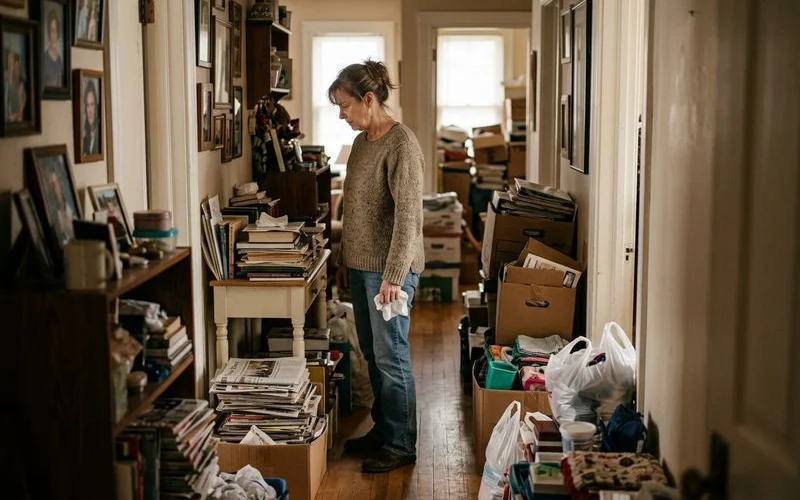
Many families in the Summerville area first contact us when they notice Level 2 conditions in a relative’s home. Air flow often becomes restricted at this phase, causing HVAC filters to clog rapidly and reducing system efficiency by up to 15 percent.
We suggest a combination of professional organizing, a compassionate conversation, and perhaps a partial whole-house hoarding cleanup to make a significant difference. The key is early intervention before conditions progress.
Level 3: The Turning Point
Level 3 is often described by the ICD as the “Yellow, Elevated” threshold, serving as the official pivot point where hoarding shifts from a manageable nuisance to a genuine safety concern. At this stage, at least one room in the home has become completely unusable. Clutter may extend to outdoor areas, and structural damage or maintenance issues become apparent.
Characteristics of Level 3:
- At least one room is completely unusable
- Clutter visible from outside the home
- Light structural damage from lack of maintenance
- Excessive dust, dirty kitchen and bathrooms
- One or more appliances not functioning for at least six months
- Narrow pathways through clutter in multiple rooms
- Pest infestations becoming noticeable
Standard cleaning companies lack the equipment and training to handle the volume of items, the potential biohazards, or the emotional complexity involved at this tier. Blocked egress doors and windows at this stage begin violating the International Fire Code (IFC), which South Carolina municipalities actively enforce.
We most frequently receive calls from concerned family members across Charleston County and surrounding Lowcountry communities once these code violations become visible. If you recognize these signs in a loved one’s home, you can call us at (843) 517-7097 for a free, confidential assessment. Early intervention at Level 3 can prevent the significantly more dangerous conditions of Levels 4 and 5.
Level 4: Excessive Clutter With Serious Health Risks
Level 4 represents a serious hoarding situation that poses significant health and safety risks to the occupant. Structural damage is evident, and the home’s sanitation has deteriorated to the point where it often violates local health codes.
Indicators of Level 4:
- Structural damage to the home including sagging floors or damaged walls
- Sewer or drainage backup
- Excessive mold and mildew throughout the home
- Kitchen and bathrooms are unusable
- Rotting food present in living areas
- Multiple rooms completely inaccessible
- Animal waste or pest infestations throughout the home
- Flammable materials stored near heat sources
- No functional smoke detectors
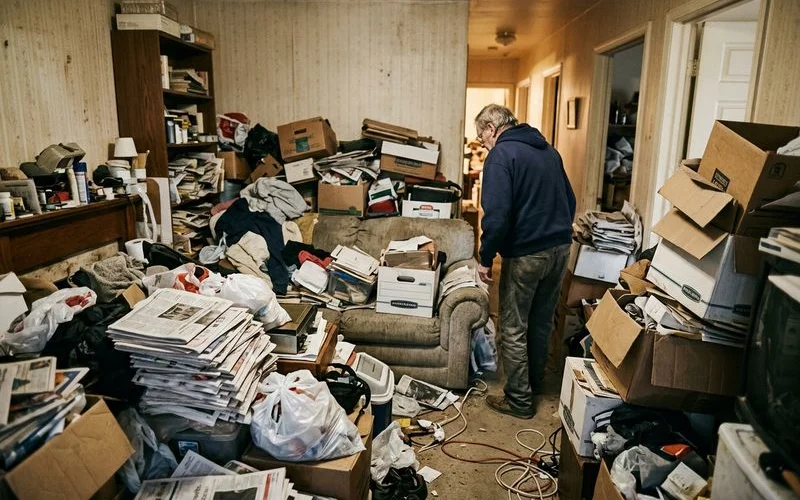
At Level 4, the occupant is living in genuinely dangerous conditions. The risk of structural collapse increases drastically, as a tight stack of magazines or wet paper can weigh up to 40 pounds per cubic foot, severely straining wooden floor joists.
Ammonia buildup from animal waste or rotting garbage becomes a primary threat here, as concentrations can easily exceed the safe human limit of 25 parts per million (ppm).
Many South Carolina communities may issue code enforcement notices or initiate condemnation proceedings for homes at Level 4. Our team at Summerville Hoarding Cleanup approaches Level 4 situations with the urgency they demand while maintaining the compassion that every client deserves.
These cleanups typically involve biohazard and hazard remediation alongside standard clutter removal, requiring specialized equipment and training that regular cleaning services simply do not possess.
Level 5: The Most Severe Hoarding Conditions
Level 5 is the most extreme classification on the NSGCD and ICD hoarding scales, categorizing the space as “Red, Severe.” Homes at this level are typically uninhabitable by any reasonable standard. The occupant may be living in a small cleared area surrounded by floor-to-ceiling clutter, or they may have been displaced from the home entirely.
Conditions found in Level 5:
- Home may be condemned or at risk of condemnation
- No running water, electricity, or functioning HVAC
- Severe structural damage throughout the home
- Visible standing water, sewage, or human waste
- Rodents, insects, and other pests throughout the home
- Fire hazards present in every room
- Kitchen, bathrooms, and bedrooms completely inaccessible
- Possible animal hoarding with dozens of neglected animals
- Extreme odor detectable from outside the home
This tier often involves what the ICD labels “Severe Domestic Squalor,” presenting profound biohazard threats. In cases involving animal hoarding, indoor ammonia levels have been recorded as high as 152 ppm, which can cause severe respiratory damage or even be fatal within minutes.
We require a full team equipped with Level A or B Hazmat suits and Self-Contained Breathing Apparatus (SCBA) gear to safely enter these environments. Level 5 hoarding cleanup is a major undertaking that can take days or even weeks depending on the size of the home.
For Level 5 situations in the Summerville and Charleston area, coordinating with local social services, mental health professionals, and code enforcement officials is essential to ensure the occupant receives comprehensive support. Our emergency hoarding services are specifically designed for these critical, high-risk situations.
Understanding the 5 Levels of Hoarding Disorder: A Complete Guide to Cleanup Planning
Understanding where a home falls on the hoarding scale is essential for developing an effective cleanup plan. We use the NSGCD scale as a starting point for every assessment, but a thorough strategy requires looking at specific environmental variables.
Factors evaluated beyond the hoarding level:
- Total square footage of the home
- Number of rooms affected
- Presence of biohazardous materials
- Structural integrity of the home
- The client’s emotional readiness and goals
- Involvement of family members or social services
- Timeline requirements, especially for court-ordered cleanups
A Level 2 situation in a 1,200-square-foot ranch home is a very different project than a Level 2 situation in a 4,000-square-foot colonial. Similarly, a Level 4 home with significant kitchen and bathroom recovery needs will require different resources than a Level 4 home where those areas are relatively intact.
Comparing Resource Requirements
To illustrate how scale directly impacts the response, here is a general breakdown of how resources scale up based on the level of hoarding.
| Hoarding Level | Average Crew Size | Typical Timeline | Biohazard Gear Required |
|---|---|---|---|
| Level 1 & 2 | 1 to 2 Organizers | 1 to 3 Days | Standard Gloves & Masks |
| Level 3 & 4 | 3 to 5 Specialists | 3 to 7 Days | Tyvek Suits & Respirators |
| Level 5 | 5+ Hazmat Techs | 1 to 3 Weeks | Full SCBA & Containment |
This data helps families understand why professional pricing and timelines shift so dramatically between a Level 3 intervention and a Level 5 emergency.
When Professional Help Becomes Essential
While Level 1 situations can typically be managed with self-help strategies and perhaps a professional organizer, Levels 2 through 5 increasingly benefit from specialized hoarding cleanup services. By Level 3, professional intervention is strongly recommended to prevent irreversible property damage. At Levels 4 and 5, it is essentially mandatory for both safety and practical reasons.
Here is a general guideline for when to seek professional help:
- Level 1: Self-help strategies, professional organizer
- Level 2: Professional organizer with possible partial cleanup assistance
- Level 3: Professional hoarding cleanup team recommended
- Level 4: Professional hoarding cleanup team required, biohazard remediation likely
- Level 5: Full professional team required, emergency intervention may be necessary
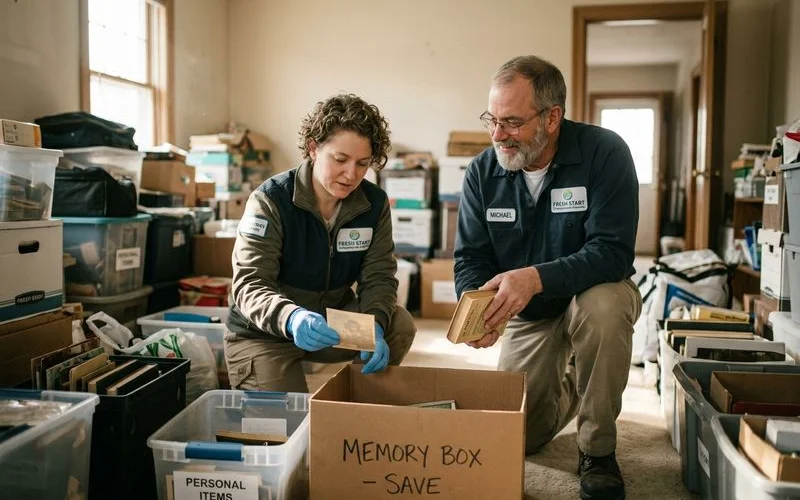
Coordinating with mental health professionals during these higher levels is a common practice. We often see clients undergoing Exposure and Response Prevention (ERP) therapy, a proven psychological treatment for hoarding, concurrently with the physical cleanup. This dual approach ensures the home becomes safe while the individual builds the coping skills necessary to maintain it.
The Importance of Compassion at Every Level
Regardless of where someone falls on the hoarding scale, the person living in the home deserves absolute dignity and respect. The DSM-5, the standard classification of mental disorders used by mental health professionals, officially recognizes Hoarding Disorder as a distinct psychiatric condition.
It is a complex struggle, not a character flaw or a sign of laziness. The shame and stigma associated with hoarding often prevent people from seeking help until conditions have reached dangerous levels.
Maintaining Dignity During Recovery
Our team at Summerville Hoarding Cleanup is trained to approach these sensitive situations with deep empathy and patience. Working at the client’s pace whenever possible is a core part of the process, and respecting their wishes regarding specific items builds crucial trust.
We maintain strict confidentiality throughout the entire recovery operation. If you or a loved one in the Summerville, Charleston, North Charleston, or greater Lowcountry area is struggling with hoarding at any level, help is available right now. Free, confidential, and completely judgment-free assessments are just a phone call away.
Taking the First Step
Recognizing the level of hoarding in your own home or a loved one’s home can feel overwhelming. Understanding the 5 Levels of Hoarding Disorder: A Complete Guide is truly about breaking that massive problem down into manageable steps.
The most important thing to keep in mind is that hoarding disorder is treatable. Even the most severe situations can be resolved with the right team and a strategic approach.
Whether you are dealing with Level 2 clutter that has gotten out of hand or a Level 5 situation that feels impossible, Summerville Hoarding Cleanup has the experience to help.
We serve families throughout Dorchester County, Charleston County, and Berkeley County with the same dedication and discretion. Call us today at (843) 517-7097 for a free, confidential assessment.
The team will help you figure out exactly where things stand and develop a plan that works for your family’s specific situation. The first step is always the hardest, but you do not have to take it alone.